Vietnam Vegan Cheese Market Report: Trends, Growth and Forecast (2026-2032)
By Product Type (Mozzarella Cheese, Cheddar Cheese, Cream Cheese, Parmesan Cheese, Ricotta Cheese, Other Vegan Cheese Types), By Primary Source (Cashew, Soy, Coconut, Almond, Oat & Other Grain-Based, Other Plant Sources), By Form (Shreds & Grated, Slices, Blocks & Wedges, Spreads / Creamy, Other Forms), By Distribution Channel (Supermarkets & Hypermarkets, Convenience Stores, Specialty Stores, Online Stores, Direct / B2B Distribution, Others), By End Use (Household Consumers, Foodservice, Food Processing, Other Commercial & Institutional Users), By Region (North, East, Southwest, Northwest, North East, South) ... Read more

|
Major Players
|
Vietnam Vegan Cheese Market Overview
Vegan cheese is a dairy-free cheese alternative produced from ingredients such as cashew, soy, coconut, almond, oat, and other plant-based sources. Products are formulated across mozzarella, cheddar, cream cheese, ricotta, and other formats for applications including pizza, sandwiches, pasta, bakery products, spreads, and salads. In Vietnam, demand is developing primarily through substitution within existing cheese-consuming occasions rather than through consumers adopting an entirely new food category. The Vietnam vegan cheese market is projected to expand at a CAGR of 4.71% during 2026–2032.
Key Highlights of the Vietnam Vegan Cheese Market
- The vegan cheese market in Vietnam was valued at approximately USD 21 million in 2025.
- The market reached approximately USD 22 million in 2026 and is projected to reach approximately USD 29 million by 2032.
- The market is forecast to expand at a CAGR of 4.71% during 2026–2032.
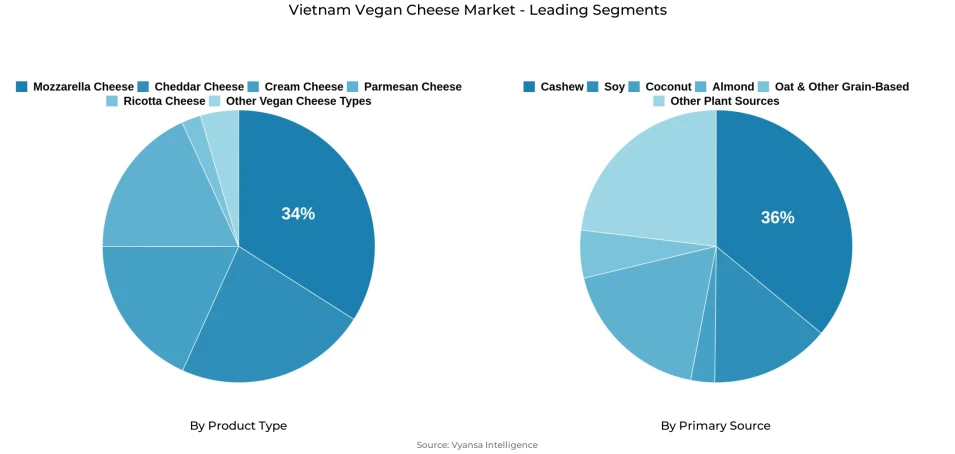
- Mozzarella cheese leads the product-type segment with a 34% share in 2026.
- Ricotta cheese is projected to be the fastest-growing product type, expanding at a CAGR of 9.85% during 2026–2032.
- Cashew leads the primary-source segment with a 36% share in 2026.
- Oat & other grain-based sources are projected to expand fastest, at a CAGR of 12.03% during 2026–2032.
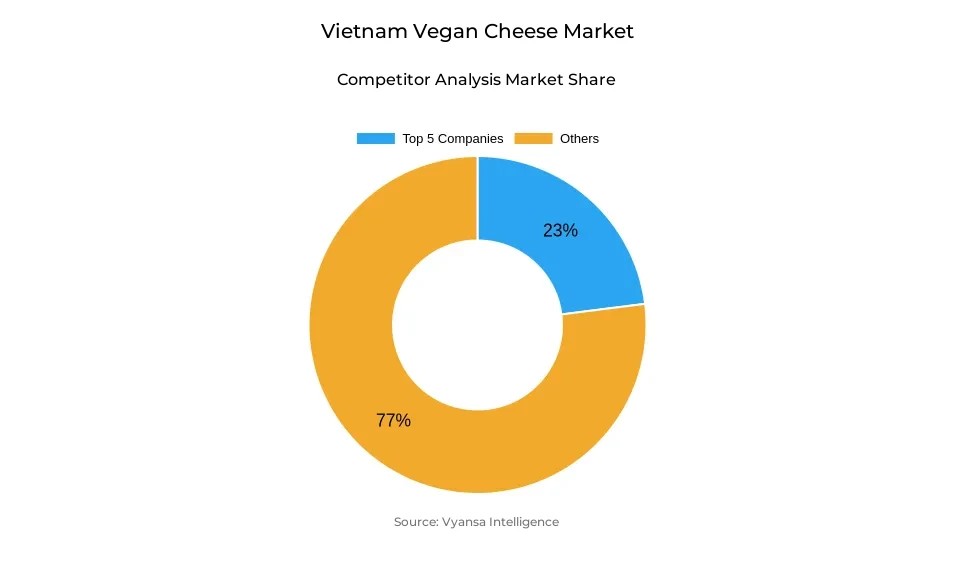
- The competitive landscape remains fragmented, with the top five companies accounting for approximately 23% of market revenue in 2026.
Vietnam’s vegan cheese market is benefiting from a broader shift toward plant-based dairy and health-oriented diets, extending demand beyond the relatively small population of strict vegans. A 2025 Rakuten Insight survey of 1,942 Vietnamese respondents found that 35% selected following a vegetarian/vegan diet as a reason for consuming plant-based alternatives, while 55% cited the belief that plant-based products are healthier and 15% cited food allergies, intolerance, or dietary restrictions. Importantly, 45% had already tried dairy-product substitutes, indicating a sizeable trial base for vegan cheese.
Rising health concerns are further widening the addressable market. Vietnam’s Government reported that approximately 19.5% of the population, or around 20 million people, were living with overweight or obesity in 2026, while the prevalence among children and adolescents aged 5–19 increased from 8.5% in 2010 to 19% in 2020. These trends are increasing consumer attention toward healthier dietary choices and alternative food products.
Lactose intolerance also creates a structural opportunity for dairy-free cheese. A clinical study of Vietnamese adults found lactose malabsorption in all 31 participants tested, although the study is historical and should not be interpreted as a current national prevalence estimate.
Consequently, the combination of plant-based adoption, health consciousness, dietary restrictions, and demand for dairy alternatives is expanding vegan cheese consumption across retail and foodservice, supporting sustained market growth.
Vietnam Vegan Cheese Market Drivers
Foodservice Expansion and Plant-Based Meal Adoption Increasing Cheese-Use Occasions
Consumers reducing dairy intake for health, environmental or lifestyle reasons do not necessarily remove pizza, pasta, sandwiches and bakery products from their diets. Vegan cheese allows these consumers to retain familiar meal formats while changing the underlying ingredient. A 2025 study of Vietnamese consumers aged 25–40 found perceived health benefits, ecological concern and religious value to be positively associated with continued plant-based eating, indicating a broader and more durable addressable consumer base than strict veganism alone.
Foodservice substantially amplifies this effect. Hotels, cafés, restaurants and bakery operators can introduce vegan mozzarella, cheddar and cream cheese into existing dishes rather than building entirely new menu categories. Vietnam's 12.3 million international visitor arrivals in the first half of 2026, representing 14.9% year-on-year growth, increase exposure to dietary preferences from international guests while simultaneously expanding restaurant and hotel activity.
Purchasing power provides an additional support layer. Retail sales of goods and services reached approximately USD 149.0 billion during H1 2026, while average employee income increased year-on-year during Q1 2026. Through 2032, incremental market growth is therefore expected to come increasingly from the number of cheese-use occasions captured by vegan alternatives rather than from growth in the vegan population alone.
Vietnam Vegan Cheese Market Challenges
Foodservice Qualification Barriers Restrict Adoption in High-Volume Hot Applications
Pizza, baked dishes and hot sandwiches represent important cheese-consuming occasions, but foodservice operators require predictable melting, stretch, coverage and heating stability. Commercial plant-based mozzarella products remain comparatively rigid and less responsive to heating than dairy references, making product substitution less straightforward in these applications.
A 2026 comparison of three commercial plant-based mozzarella products with two dairy mozzarella references identified stretchability as a meaningful acceptance weakness and found the plant-based products comparatively rigid and brittle during heating. The commercial consequence extends beyond sensory preference. Restaurant and bakery operators commonly evaluate products through preparation trials before changing ingredients, meaning weaker cooking behaviour lengthens supplier qualification and can return demand to conventional mozzarella even where a vegan alternative is otherwise desirable.
The challenge therefore restricts adoption primarily in high-volume cooked applications rather than across the entire category. Soft cheeses, spreads, ricotta-style products and cold applications face a lower functional threshold and can continue expanding while manufacturers work to improve hot-application performance. This prevents the technical limitation from becoming a ceiling on total category growth, but it slows penetration into some of the market's largest potential usage occasions.
Vietnam Vegan Cheese Market Recent Trends
Shift Toward Locally Produced Fermented Cashew Cheese
Vietnam's vegan cheese supply is moving beyond dependence on imported starch-and-oil alternatives toward domestically produced fermented cheese made from Vietnamese cashews. The trend aligns particularly well with Vietnam's existing cashew-processing capabilities and allows domestic manufacturers to compete on freshness, fermentation, ingredient origin and artisanal quality rather than attempting to replicate the shelf-life and scale economics of international processed products.
Kashew Cheese has operated since 2020 and produces fermented cashew-based mozzarella, ricotta and other formats, including aged cheeses matured for several weeks. Daissy Whole Foods has similarly developed cultured and aged cashew products, creating an increasingly visible domestic manufacturing base. Distribution is widening at the same time. Domestic products are increasingly available through producer-owned retail, specialty stores, direct delivery, e-commerce and hospitality supply rather than relying entirely on imported specialty channels.
This is gradually changing the competitive basis of the market. Imported brands retain advantages in product breadth and formulation experience, while local manufacturers can differentiate through ingredient provenance, freshness and shorter supply chains. Through the forecast period, domestically fermented cashew cheese is expected to take a growing role within premium and artisanal demand, particularly in major urban foodservice and specialty-retail markets.
Advanced Protein and Formulation Engineering Reshaping Product Development
Technical development is shifting away from conventional starch-and-oil recipes toward engineered protein-starch-hydrocolloid systems designed to reproduce more of the structural behaviour associated with dairy cheese. Rather than simply adding more starch or oil to achieve texture, researchers and manufacturers are testing combinations of plant proteins, rice flour, hydrocolloids and protein-processing techniques that alter water retention, fat binding and heating behaviour.
A 2026 Food Hydrocolloids study using pea protein, glutinous rice flour and kappa-carrageenan demonstrated meaningful improvements in meltability across tested formulations while maintaining more than 85% freeze-thaw stability. Other research has evaluated protein purity, water-holding properties, and cold-plasma treatment as routes to improving functional vegan-cheese systems.
For the Vietnamese market, the importance of this trend lies less in academic formulation progress itself and more in the competitive capability it creates. Manufacturers adopting more advanced protein systems can develop products for applications that basic starch-based formulations struggle to serve, opening opportunities across pizza, bakery and institutional foodservice. This also raises the technical qualification threshold within the supplier base. Over time, formulation know-how, protein sourcing and processing capability are likely to become increasingly important competitive differentiators alongside brand, price and distribution.
Vietnam Vegan Cheese Market Future Opportunities
Nut-Free and Pea-Protein Vegan Cheese for Institutional and Allergen-Sensitive Demand
Vietnam's visible domestic vegan cheese industry is heavily oriented toward cashew-based formulations, creating an underserved market for nut-free alternatives. Cashew fermentation offers strong sensory and sourcing advantages, but nut-based products are less suitable for consumers with nut allergies and for institutional kitchens that restrict nuts because of allergen-management requirements. These buyers represent a structurally different demand pool from the premium consumers currently served by artisanal cashew cheese.
Pea protein provides a credible entry route because it can support higher-protein and nut-free positioning while reducing dependence on cashews as the principal formulation base. Swees Plant Based Foods has already introduced a pea-protein vegan cream cheese format, providing early evidence of commercial viability for the ingredient route. The strongest near-term entry point is likely to be cream cheese, spreads and other soft formats, where manufacturers do not need to replicate the demanding melt-and-stretch behaviour required in mozzarella. Once formulation capability improves, suppliers can extend into slices, shreds and other foodservice formats.
Manufacturers capable of combining allergen-segregated production, reliable pea-protein sourcing and institutional foodservice distribution could therefore build a differentiated position without competing directly against Vietnam's established cashew-fermentation specialists.
Unlock Market Intelligence
Explore the market potential with our data-driven report
Vietnam Vegan Cheese Market Segmentation Analysis
By Product Type
- Mozzarella Cheese
- Cheddar Cheese
- Cream Cheese
- Parmesan Cheese
- Ricotta Cheese
- Other Vegan Cheese Types
Mozzarella Cheese Leads Through Established Foodservice Applications
Mozzarella Cheese accounted for approximately 34% of the Vietnam vegan cheese industry by product type in 2026. Its leadership reflects its direct compatibility with some of the country's most commercially important cheese-use occasions, including pizza, panini, pasta and baked foods. These dishes already have established preparation methods and consumer familiarity, allowing vegan mozzarella to substitute for dairy cheese without requiring the underlying meal format to change.
Domestic and regional suppliers including Kashew Cheese and Swees Cheese already commercialize mozzarella-style alternatives, supporting availability across artisanal, specialty-retail and foodservice channels. Mozzarella is expected to retain its leading position through the forecast period because of the volume of applications it can address. However, the pace of growth will remain linked to continued improvements in cooking performance.
Ricotta Cheese is projected to expand fastest, at a CAGR of approximately 9.85% during 2026–2032. Its growth is supported by pasta fillings, bakery applications, desserts and spreads, where softness and flavour are more important than stretch. The lower technical barrier enables manufacturers to develop commercially acceptable products more readily, supporting faster expansion from a smaller market base.
By Primary Source
- Cashew
- Soy
- Coconut
- Almond
- Oat & Other Grain-Based
- Other Plant Sources
Cashew Leads Through Local Processing and Fermentation Strength
Cashew accounted for approximately 36% of the Vietnam vegan cheese market by primary source in 2026. Vietnam possesses established cashew-processing capabilities and is one of the world's largest participants in the global cashew trade, providing domestic vegan cheese manufacturers with ingredient familiarity and an established sourcing ecosystem. Cashew's naturally creamy texture and compatibility with fermentation also suit the cultured, aged and soft formats increasingly associated with Vietnam's domestic vegan cheese segment.
Kashew Cheese and Daissy Whole Foods both build significant portions of their portfolios around fermented cashew products, reinforcing the source's market position. Oat & Other Grain-Based sources are projected to expand fastest, at approximately 12.03% CAGR during 2026–2032. Their growth is expected to come from a different addressable buyer base, including consumers seeking nut-free alternatives and manufacturers looking for formulations that avoid dependence on premium nut ingredients.
The faster growth of grain-based products therefore does not necessarily imply displacement of cashew. Instead, the two source groups are likely to serve increasingly differentiated portions of the market.
Unlock Market Intelligence
Explore the market potential with our data-driven report
Vietnam Vegan Cheese Market Competitive Landscape
The Vietnam vegan cheese market remains fragmented, with the top five companies collectively accounting for approximately 23% of market revenue in 2026.The leading companies in the market are Kashew Company Limited (Kashew Cheese), Daissy Whole Foods Co. Ltd., Ifantis A & X Trading and Industrial Co. S.A. (ESTI), Swees Plant Based Foods Co. Ltd. (Swees Cheese) and KOLIOS S.A. Greek Dairy (Hello-V).
Prominent Companies in the Vietnam Vegan Cheese Market
- Kashew Company Limited (Kashew Cheese)
- Daissy Whole Foods Co. Ltd.
- Ifantis A & X Trading and Industrial Co. S.A. (ESTI)
- Swees Plant Based Foods Co. Ltd. (Swees Cheese)
- KOLIOS S.A. Greek Dairy (Hello-V)
- Tan Lam Livestock and Forest Co. Ltd. (Tan Lam Food)
- Ethiconomy Services GmbH (bedda)
- Honest to Goodness Pty Ltd (Pimp My Salad)
- Gourmet Distribution Co. Ltd. (Annam Gourmet)
- Nam An International Investment Corporation (Nam An Market)
Recent Developments in the Vietnam Vegan Cheese Market
- September 2024: plant-based cheese producer Swees launched what it described as the world’s first vegan rice-based cheese stick, expanding its portfolio beyond conventional vegan mozzarella, cheddar and Swiss-style products. The company developed the product to target the growing plant-based snacking segment and indicated that it was focusing on convenience-store distribution. Swees already exported its plant-based cheese products to Vietnam, alongside Singapore and Hong Kong, providing a pathway for the newly expanded product portfolio to enter additional Southeast Asian markets.
Frequently Asked Questions
Related Report
- Market Segmentation
- Research Scope
- Research Methodology
- Definitions and Assumptions
- Executive Summary
- Vietnam Vegan Cheese Market Policies, Regulations, and Standards
- Vietnam Vegan Cheese Market Dynamics
- Growth Factors
- Challenges
- Trends
- Opportunities
- Vietnam Vegan Cheese Market Statistics, 2022-2032F
- Market Size & Growth Outlook
- By Revenues in USD Million
- By Quantity Sold in Thousand Tons
- Market Segmentation & Growth Outlook
- By Product Type
- Mozzarella Cheese- Market Insights and Forecast 2022-2032, USD Million & Thousand Tons
- Cheddar Cheese- Market Insights and Forecast 2022-2032, USD Million & Thousand Tons
- Cream Cheese- Market Insights and Forecast 2022-2032, USD Million & Thousand Tons
- Parmesan Cheese- Market Insights and Forecast 2022-2032, USD Million & Thousand Tons
- Ricotta Cheese- Market Insights and Forecast 2022-2032, USD Million & Thousand Tons
- Other Vegan Cheese Types- Market Insights and Forecast 2022-2032, USD Million & Thousand Tons
- By Primary Source
- Cashew- Market Insights and Forecast 2022-2032, USD Million & Thousand Tons
- Soy- Market Insights and Forecast 2022-2032, USD Million & Thousand Tons
- Coconut- Market Insights and Forecast 2022-2032, USD Million & Thousand Tons
- Almond- Market Insights and Forecast 2022-2032, USD Million & Thousand Tons
- Oat & Other Grain-Based- Market Insights and Forecast 2022-2032, USD Million & Thousand Tons
- Other Plant Sources- Market Insights and Forecast 2022-2032, USD Million & Thousand Tons
- By Form
- Shreds & Grated- Market Insights and Forecast 2022-2032, USD Million & Thousand Tons
- Slices- Market Insights and Forecast 2022-2032, USD Million & Thousand Tons
- Blocks & Wedges- Market Insights and Forecast 2022-2032, USD Million & Thousand Tons
- Spreads / Creamy- Market Insights and Forecast 2022-2032, USD Million & Thousand Tons
- Other Forms- Market Insights and Forecast 2022-2032, USD Million & Thousand Tons
- By Distribution Channel
- Supermarkets & Hypermarkets- Market Insights and Forecast 2022-2032, USD Million & Thousand Tons
- Convenience Stores- Market Insights and Forecast 2022-2032, USD Million & Thousand Tons
- Specialty Stores- Market Insights and Forecast 2022-2032, USD Million & Thousand Tons
- Online Stores- Market Insights and Forecast 2022-2032, USD Million & Thousand Tons
- Direct / B2B Distribution- Market Insights and Forecast 2022-2032, USD Million & Thousand Tons
- Others- Market Insights and Forecast 2022-2032, USD Million & Thousand Tons
- By End Use
- Household Consumers- Market Insights and Forecast 2022-2032, USD Million & Thousand Tons
- Foodservice- Market Insights and Forecast 2022-2032, USD Million & Thousand Tons
- Food Processing- Market Insights and Forecast 2022-2032, USD Million & Thousand Tons
- Other Commercial & Institutional Users- Market Insights and Forecast 2022-2032, USD Million & Thousand Tons
- By Region
- North- Market Insights and Forecast 2022-2032, USD Million & Thousand Tons
- East- Market Insights and Forecast 2022-2032, USD Million & Thousand Tons
- Southwest- Market Insights and Forecast 2022-2032, USD Million & Thousand Tons
- Northwest- Market Insights and Forecast 2022-2032, USD Million & Thousand Tons
- North East- Market Insights and Forecast 2022-2032, USD Million & Thousand Tons
- South- Market Insights and Forecast 2022-2032, USD Million & Thousand Tons
- By Competitors
- Competition Characteristics
- Market Share & Analysis
- By Product Type
- Market Size & Growth Outlook
- Vietnam Mozzarella Cheese Market Statistics, 2022-2032
- Market Size & Growth Outlook
- By Revenues in USD Million
- By Quantity Sold in Thousand Tons
- Market Segmentation & Growth Outlook
- By Primary Source- Market Insights and Forecast 2022-2032, USD Million & Thousand Tons
- By Form- Market Insights and Forecast 2022-2032, USD Million & Thousand Tons
- By Distribution Channel- Market Insights and Forecast 2022-2032, USD Million & Thousand Tons
- By End Use- Market Insights and Forecast 2022-2032, USD Million & Thousand Tons
- By Region- Market Insights and Forecast 2022-2032, USD Million & Thousand Tons
- Market Size & Growth Outlook
- Vietnam Cheddar Cheese Market Statistics, 2022-2032
- Market Size & Growth Outlook
- By Revenues in USD Million
- By Quantity Sold in Thousand Tons
- Market Segmentation & Growth Outlook
- By Primary Source- Market Insights and Forecast 2022-2032, USD Million & Thousand Tons
- By Form- Market Insights and Forecast 2022-2032, USD Million & Thousand Tons
- By Distribution Channel- Market Insights and Forecast 2022-2032, USD Million & Thousand Tons
- By End Use- Market Insights and Forecast 2022-2032, USD Million & Thousand Tons
- By Region- Market Insights and Forecast 2022-2032, USD Million & Thousand Tons
- Market Size & Growth Outlook
- Vietnam Cream Cheese Market Statistics, 2022-2032
- Market Size & Growth Outlook
- By Revenues in USD Million
- By Quantity Sold in Thousand Tons
- Market Segmentation & Growth Outlook
- By Primary Source- Market Insights and Forecast 2022-2032, USD Million & Thousand Tons
- By Form- Market Insights and Forecast 2022-2032, USD Million & Thousand Tons
- By Distribution Channel- Market Insights and Forecast 2022-2032, USD Million & Thousand Tons
- By End Use- Market Insights and Forecast 2022-2032, USD Million & Thousand Tons
- By Region- Market Insights and Forecast 2022-2032, USD Million & Thousand Tons
- Market Size & Growth Outlook
- Vietnam Parmesan Cheese Market Statistics, 2022-2032
- Market Size & Growth Outlook
- By Revenues in USD Million
- By Quantity Sold in Thousand Tons
- Market Segmentation & Growth Outlook
- By Primary Source- Market Insights and Forecast 2022-2032, USD Million & Thousand Tons
- By Form- Market Insights and Forecast 2022-2032, USD Million & Thousand Tons
- By Distribution Channel- Market Insights and Forecast 2022-2032, USD Million & Thousand Tons
- By End Use- Market Insights and Forecast 2022-2032, USD Million & Thousand Tons
- By Region- Market Insights and Forecast 2022-2032, USD Million & Thousand Tons
- Market Size & Growth Outlook
- Vietnam Ricotta Cheese Market Statistics, 2022-2032
- Market Size & Growth Outlook
- By Revenues in USD Million
- By Quantity Sold in Thousand Tons
- Market Segmentation & Growth Outlook
- By Primary Source- Market Insights and Forecast 2022-2032, USD Million & Thousand Tons
- By Form- Market Insights and Forecast 2022-2032, USD Million & Thousand Tons
- By Distribution Channel- Market Insights and Forecast 2022-2032, USD Million & Thousand Tons
- By End Use- Market Insights and Forecast 2022-2032, USD Million & Thousand Tons
- By Region- Market Insights and Forecast 2022-2032, USD Million & Thousand Tons
- Market Size & Growth Outlook
- Vietnam Other Vegan Cheese Types Market Statistics, 2022-2032
- Market Size & Growth Outlook
- By Revenues in USD Million
- By Quantity Sold in Thousand Tons
- Market Segmentation & Growth Outlook
- By Primary Source- Market Insights and Forecast 2022-2032, USD Million & Thousand Tons
- By Form- Market Insights and Forecast 2022-2032, USD Million & Thousand Tons
- By Distribution Channel- Market Insights and Forecast 2022-2032, USD Million & Thousand Tons
- By End Use- Market Insights and Forecast 2022-2032, USD Million & Thousand Tons
- By Region- Market Insights and Forecast 2022-2032, USD Million & Thousand Tons
- Market Size & Growth Outlook
- Competitive Outlook
- Company Profiles
- Kashew Company Limited (Kashew Cheese)
- Business Description
- Product Portfolio
- Collaborations & Alliances
- Recent Developments
- Financial Details
- Others
- Daissy Whole Foods Co. Ltd.
- Business Description
- Product Portfolio
- Collaborations & Alliances
- Recent Developments
- Financial Details
- Others
- Ifantis A & X Trading and Industrial Co. S.A. (ESTI)
- Business Description
- Product Portfolio
- Collaborations & Alliances
- Recent Developments
- Financial Details
- Others
- Swees Plant Based Foods Co. Ltd. (Swees Cheese)
- Business Description
- Product Portfolio
- Collaborations & Alliances
- Recent Developments
- Financial Details
- Others
- KOLIOS S.A. Greek Dairy (Hello-V)
- Business Description
- Product Portfolio
- Collaborations & Alliances
- Recent Developments
- Financial Details
- Others
- Tan Lam Livestock and Forest Co. Ltd. (Tan Lam Food)
- Business Description
- Product Portfolio
- Collaborations & Alliances
- Recent Developments
- Financial Details
- Others
- Ethiconomy Services GmbH (bedda)
- Business Description
- Product Portfolio
- Collaborations & Alliances
- Recent Developments
- Financial Details
- Others
- Honest to Goodness Pty Ltd (Pimp My Salad)
- Business Description
- Product Portfolio
- Collaborations & Alliances
- Recent Developments
- Financial Details
- Others
- Gourmet Distribution Co. Ltd. (Annam Gourmet)
- Business Description
- Product Portfolio
- Collaborations & Alliances
- Recent Developments
- Financial Details
- Others
- Nam An International Investment Corporation (Nam An Market)
- Business Description
- Product Portfolio
- Collaborations & Alliances
- Recent Developments
- Financial Details
- Others
- Kashew Company Limited (Kashew Cheese)
- Company Profiles
- Disclaimer
| Segment | Sub-Segment |
|---|---|
| By Product Type |
|
| By Primary Source |
|
| By Form |
|
| By Distribution Channel |
|
| By End Use |
|
| By Region |
|
Research Methodology
This study followed a structured approach comprising four key phases to assess the size and scope of the electro-oxidation market. The process began with thorough secondary research to collect data on the target market, related markets, and broader industry context. These findings, along with preliminary assumptions and estimates, were then validated through extensive primary research involving industry experts from across the value chain. To calculate the overall market size, both top-down and bottom-up methodologies were employed. Finally, market segmentation and data triangulation techniques were applied to refine and validate segment-level estimations.
Secondary Research
The secondary research phase involved gathering data from a wide range of credible and published sources. This step helped in identifying industry trends, defining market segmentation, and understanding the market landscape and value chain.
Sources consulted during this phase included:
- Company annual reports, investor presentations, and press releases
- Industry white papers and certified publications
- Trade directories and market-recognized databases
- Articles from authoritative authors and reputable journals
- Gold and silver standard websites
Secondary research was critical in mapping out the industry's value chain and monetary flow, identifying key market segments, understanding regional variations, and tracking significant industry developments.
Other key sources:
- Financial disclosures
- Industry associations and trade bodies
- News outlets and business magazines
- Academic journals and research studies
- Paid industry databases
Primary Research
To validate secondary data and gain deeper market insights, primary research was conducted with key stakeholders across both the supply and demand sides of the market.
On the demand side, participants included decision-makers and influencers from end-user industries—such as CIOs, CTOs, and CSOs—who provided first-hand perspectives on market needs, product usage, and future expectations.
On the supply side, interviews were conducted with manufacturers, industry associations, and institutional participants to gather insights into current offerings, product pipelines, and market challenges.
Primary interviews provided critical inputs such as:
- Market size and revenue data
- Product and service breakdowns
- Market forecasts
- Regional and application-specific trends
Stakeholders consulted included:
- Leading OEM and solution providers
- Channel and distribution partners
- End users across various applications
- Independent consultants and industry specialists
Market Size Estimation and Data Triangulation
- Identifying Key Market Participants (Secondary Research)
- Goal: To identify the major players or companies in the target market. This typically involves using publicly available data sources such as industry reports, market research publications, and financial statements of companies.
- Tools: Reports from firms like Gartner, Forrester, Euromonitor, Statista, IBISWorld, and others. Public financial statements, news articles, and press releases from top market players.
- Extracting Earnings of Key Market Participants
- Goal: To estimate the earnings generated from the product or service being analyzed. This step helps in understanding the revenue potential of each market player in a specific geography.
- Methods: Earnings data can be gathered from:
- Publicly available financial reports (for listed companies).
- Interviews and primary data sources from professionals, such as Directors, VPs, SVPs, etc. This is especially useful for understanding more nuanced, internal data that isn't publicly disclosed.
- Annual reports and investor presentations of key players.
- Data Collation and Development of a Relevant Data Model
- Goal: To collate inputs from both primary and secondary sources into a structured, data-driven model for market estimation. This model will incorporate key market KPIs and any independent variables relevant to the market.
- Key KPIs: These could include:
- Market size, growth rate, and demand drivers.
- Industry-specific metrics like market share, average revenue per customer (ARPC), or average deal size.
- External variables, such as economic growth rates, inflation rates, or commodity prices, that could affect the market.
- Data Modeling: Based on this data, the market forecasts are developed for the next 5 years. A combination of trend analysis, scenario modeling, and statistical regression might be used to generate projections.
- Scenario Analysis
- Goal: To test different assumptions and validate how sensitive the market is to changes in key variables (e.g., market demand, regulatory changes, technological disruptions).
- Types of Scenarios:
- Base Case: Based on current assumptions and historical data.
- Best-Case Scenario: Assuming favorable market conditions, regulatory environments, and technological advancements.
- Worst-Case Scenario: Accounting for adverse factors, such as economic downturns, stricter regulations, or unexpected disruptions.












