Singapore Juice Market Report: Trends, Growth and Forecast (2026-2032)
By Category (100% Juice (Not from Concentrate, Reconstituted), Juice Drinks (up to 24% Juice), Nectars (High Concentration (40% to 50% fruit content), Medium Concentration (30% to 39% fruit content), Low Concentration (25% to 29% fruit content)), Vegetable Juice, Fruit and Vegetable Blends), By Nature (Conventional, Organic), By Packaging Material (Plastic, Glass, Metal, Others), By Packaging Type (PET Bottles, Aseptic Packages (Cartons), Glass Bottles, Metal Cans, Disposable Cups & Pouches), By Sales Channel (Off-Trade (Hypermarkets/ Supermarkets, Retail Outlets, Convenience Stores, Online Platforms), On-Trade) ... Read more

|
Major Players
|
Singapore Juice Market Statistics and Insights, 2026
- Market Size Statistics
- Juice market size in Singapore was estimated at USD 145 million in 2025.
- The market size is expected to grow to USD 160 million by 2032.
- Market to register a CAGR of around 1.42% during 2026-32.
- Category Shares
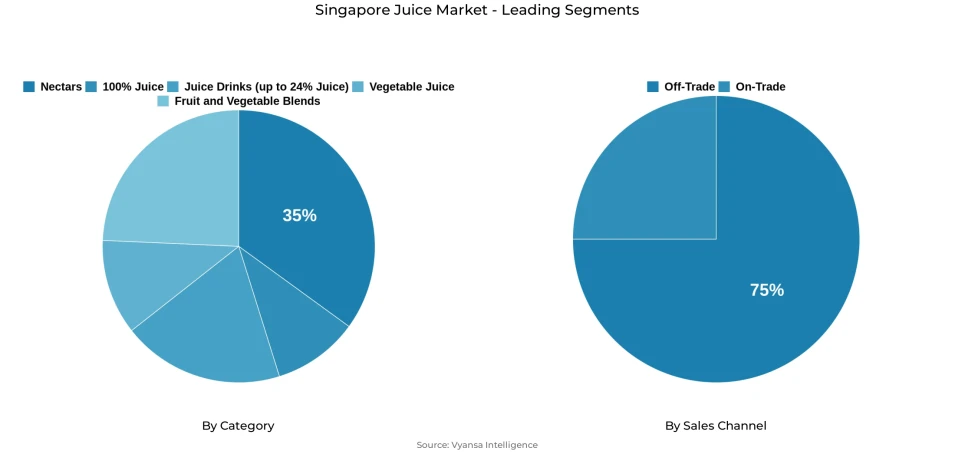
- Nectars grabbed market share of 35%.
- Competition
- More than 20 companies are actively engaged in producing juice in Singapore.
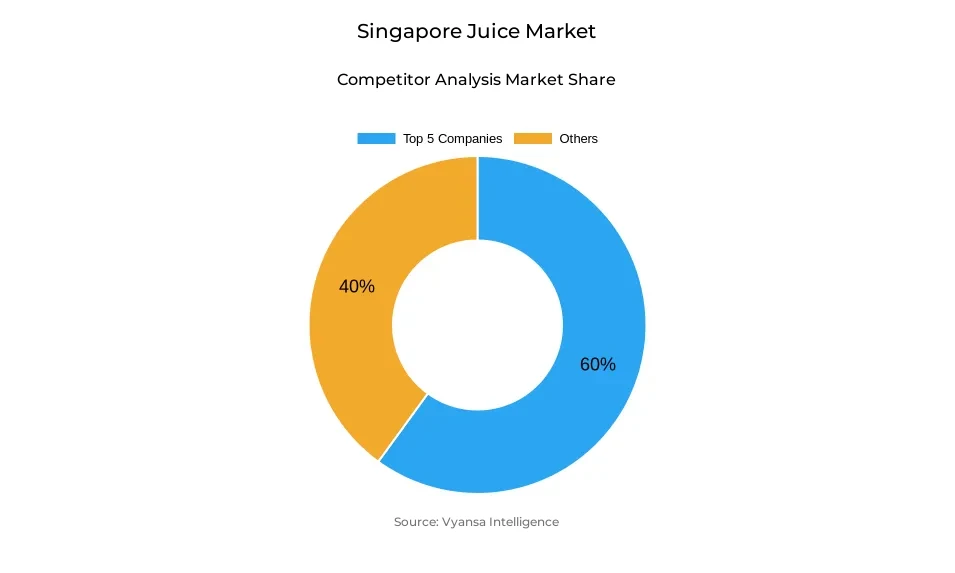
- Top 5 companies acquired around 60% of the market share.
- Lam Soon Singapore Pte Ltd, Citrus World Inc, Dr Pepper Snapple Group Inc, Malaysia Dairy Industries Pte Ltd, F&N Foods (S) Pte Ltd etc., are few of the top companies.
- Sales Channel
- Off-trade grabbed 75% of the market.
Singapore Juice Market Outlook
The Singapore juice market is undergoing a major change where healthconscious end user are shifting towards fresher, functional drinks as opposed to the traditional packaged drinks. It is estimated that the market will grow to USD 145 million in 2025 and USD 160 million in 2032 with a consistent CAGR of about 1.42% in the 202632 years. Although the offtrade volumes are likely to fall because of the fear of sugar content, the industry is discovering a new lifeline in the innovation of sugar reduction and the increasing popularity of the ontrade channel.
NutriGradecompliant products and advanced food technology are increasingly becoming the key growth driver of the juice category. The nearzerosugar trend is being spearheaded by brands like INCREDIBLE Juice using fermentation biotechnology, and other brands like Antidote and Wonder Juice focus on nutrientdense, coldpressed products. Plant waters, especially coconut, have become a category to watch, defying the overall retail downturn by attracting end user who want natural hydration and wellnessoriented options.
The competitive environment is still concentrated with five large players that dominate more than 60% of the market, headed by Malaysia Dairy Industries. To keep up with the times, these leaders are shifting their strategies to fortified blends and fiberenriched versions. Also, the emergence of intelligent robotic juice dispensers, including iBoozee, and a robust emphasis on sustainable and hyperlocal sourcing are assisting brands in gaining more loyalty among timeconscious and environmentally conscious urban professionals.
Physical retail dominates sales channel, with offtrade representing 75% of the market. The main sales point is still the supermarkets like NTUC FairPrice because they are convenient and offer a variety of products. Nevertheless, the ontrade market (cafes and restaurants) is undergoing a vibrant development as Singaporeans are demanding experiential and tailormade juice. Although ecommerce is still a smaller portion of the market, its potential is increasing at a high rate as digitally savvy end user choose to have niche and premium imported juices delivered to their homes.
Singapore Juice Market Growth DriverNutri-Grade and Health Priorities Accelerating Low-Sugar and Functional Juice Reformulation
The rising health awareness among the Singaporean population has resulted in an increase in the demand of drinks with lower sugar content and functionality. According to the Health Promotion Board, the average daily sugar consumption among adults is 56g, according to the National Nutrition Survey 2022, and 52% of the consumption is through sugarsweetened beverages. This continued high contribution of sugar therefore keeps the consumer attention on healthier options, which puts structural pressure on the category to reformulate and premiumise towards healthpositioned products.
Simultaneously, the NutriGrade regulations in Singapore require labeling and advertising bans on highersugar drinks, which strengthens the changes towards reformulated and lowersugar products. The policy framework promotes brands to be innovative in nearzerosugar, fortified, and functional juice products to stay competitive in regulated settings. The combination of high sugar consumption trends, consumer health consciousness, and regulatory pressure provides strong incentives to product innovation. Healthbased reformulation is a category evolution to naturally sweetened, functionally fortified formulations that can be used to promote wellness goals without compromising taste satisfaction and consumer acceptance in the Singapore healthconscious, regulationintensive beverage environment.
Singapore Juice Market ChallengeElevated Diabetes and Obesity Burden Intensifying Resistance to High-Sugar Juice Perceptions
Structural challange of packaged juice products still face consumer concerns about sugar content. According to the National Population Health Survey 2024, the prevalence of diabetes among residents of Singapore aged 1874 is 9.1% and 12.7% are obese. These signals strengthen the social awareness of sugar intake and calorie consumption, creating negative attitudes towards drinks with high natural or added sugar levels, even when they are placed as healthier choices compared to carbonated beverages.
As a result, juice products traditionally packaged as having a higher level of natural sugar are resisted by end user. Such a climate forces brands to keep on reformulating, repositioning and communicating nutritional benefits clearly to ensure that end user remain confident in a healthcontrolled beverage environment. The prevalence of chronic diseases poses a longterm credibility problem to the juice categories that need continuous investment in sugarreduction technologies, clear labeling, and education of end user. The conflict between the natural content of fruit sugars and health perceptions requires strategic positioning that focuses on functional benefits, portion control, and comparative nutritional benefits over other beverage categories in the Singapore healthriskconscious consumer market.
Unlock Market Intelligence
Explore the market potential with our data-driven report
Singapore Juice Market TrendDigitally Enabled Foodservice Growth Shifting Demand Toward Fresh and Customisable Juice Occasions
Foodservice channels are being significantly reinforced as end user are increasingly preferring freshly prepared and customizable beverage options. According to the Singapore Department of Statistics, online food and beverage sales have reached 25.8% of total F&B services sales in December 2025, which is a strong indicator of digital integration in foodservice consumption patterns. This elevated digital engagement enables easy access to new beverage choices beyond the conventional retail outlets, posing competitive pressure on packaged alternatives.
This high level of digital interaction underpins cafébased, madetoorder, and ondemand juice concepts that focus on freshness, customization, and experience consumption. The combination of delivery systems and online ordering also enhances the transition to fresh juice events beyond traditional retailing models. The digital foodservice trend is a paradigm shift in channels that focus more on immediacy, personalization, and perceived freshness rather than shelfstable convenience. Based on this, packaged juice brands have strategic needs to distinguish themselves with better convenience, longer shelf life without preservatives, better formulations, or hybrid designs that combine retail presence with foodservice relationships, thus meeting consumer demands of fresh preparation with the benefits of the packaged format.
Singapore Juice Market OpportunityPackaging Sustainability Imperatives Creating Competitive Advantage for Circular and Low-Plastic Formats
Green consciousness is a quantifiable business prospect of sustainable packaging and circular brands. According to the National Environment Agency, 918,000 tonnes of plastic waste were produced in 2024, with only 43,000 tonnes being recycled, which gave a recycling rate of 5%. The poor recycling rate indicates significant disconnects between waste production and the attainment of a circular economy, which puts regulatory and consumer pressure on better environmental performance across the packaged beverage categories.
The low recycling rates increase regulatory and consumer pressure on beverage manufacturers to decrease plastic addiction and increase recyclability significantly. Brands that invest in biodegradable packaging, lightweight materials, refill systems, or returnready formats are in a better position to support the sustainability goals of Singapore and enhance longterm brand loyalty. The sustainability opportunity allows differentiation based on environmental leadership, regulatory compliance preparedness, and valuesbased positioning. Firms that show genuine interest in circular packaging solutions are able to attract environmentally conscious consumer groups, predict regulatory tightening, and gain competitive advantages by packaging innovation that can support both environmental goals and highend brand positioning in the Singapore sustainabilityoriented market environment.
Unlock Market Intelligence
Explore the market potential with our data-driven report
Singapore Juice Market Segmentation Analysis
By Category
- 100% Juice
- Not from Concentrate
- Reconstituted
- Juice Drinks (up to 24% Juice)
- Nectars
- High Concentration (40% to 50% fruit content)
- Medium Concentration (30% to 39% fruit content)
- Low Concentration (25% to 29% fruit content)
- Vegetable Juice
- Fruit and Vegetable Blends
The segment has the highest share around the category in the Singapore juice market, where Nectars grabbed a market share of 35%. This significant portion of the market is maintained by the widespread availability and established presence of traditional juice brands in retail outlets. Despite a broader decline in packaged juice volumes due to sugar concerns, nectars continue to hold a substantial position as a familiar household staple for many Singaporean families.
To stay competitive, manufacturers within this segment are increasingly focusing on healthcentric innovation. Leading players like Malaysia Dairy Industries and F&N Foods are reformulating their offerings to include nosugaradded and vitaminfortified variants. By aligning with the government's NutriGrade labeling policy and emphasizing fiber enrichment, the nectar segment is attempting to mitigate declining retail interest and appeal to healthconscious shoppers looking for betterforyou versions of classic favorites.
By Sales Channel
- Off-Trade
- Hypermarkets/ Supermarkets
- Retail Outlets
- Convenience Stores
- Online Platforms
- On-Trade
The segment has the highest share around the Sales Channel is OffTrade, which grabbed 75% of the market. This dominance is largely driven by the strong performance of supermarkets and hypermarkets, which serve as the primary destination for "onestop" family shopping. Major retailers like FairPrice and Sheng Siong offer the widest selection of juice formats, from massmarket cartons to premium coldpressed bottles, often supported by bundle promotions and private label value options.
While the offtrade channel holds the majority share, it faces a projected volume decline as end user prioritize the freshness of ontrade offerings. In response, retail formats are evolving to include more functional and specialized products to retain consumer interest. Small local grocers also play a vital role by serving immediate neighborhood needs, while the 75% market share highlights that, despite the growth of cafés and juice bars, the bulk of juice consumption in Singapore is still fulfilled through traditional retail purchases.
List of Companies Covered in Singapore Juice Market
The companies listed below are highly influential in the Singapore juice market, with a significant market share and a strong impact on industry developments.
- Lam Soon Singapore Pte Ltd
- Citrus World Inc
- Dr Pepper Snapple Group Inc
- Malaysia Dairy Industries Pte Ltd
- F&N Foods (S) Pte Ltd
- Pokka Corp (S) Pte Ltd
- Suntory Beverage & Food Asia Pte Ltd
- Coca-Cola Singapore Beverages Pte Ltd
- Sheng Sheng F&B Industries Pte Ltd
- Yeo Hiap Seng Ltd
Competitive Landscape
The Singapore juice market remains relatively consolidated in 2025, with five key players accounting for 64% of off-trade volume sales. Malaysia Dairy Industries Pte Ltd leads with a 27% off-trade volume share, driven primarily by its Peel Fresh and Marigold brands. Peel Fresh maintains a strong premium positioning through pasteurised juice, no-sugar-added variants and fortified blends, while Marigold reinforces family-oriented and health-centric messaging supported by wide retail distribution and promotional campaigns. F&N Foods, through its Fruit Tree brand, competes on affordability and lower-sugar innovation, while Pokka Corp leverages convenience-led ready-to-drink formats and zero-sugar extensions. Coca-Cola Singapore and Suntory Beverage & Food Asia further intensify competition through diversified portfolios and strong retail partnerships, sustaining a dynamic but concentrated market structure.
Frequently Asked Questions
Related Report
- Market Segmentation
- Research Scope
- Research Methodology
- Definitions and Assumptions
- Executive Summary
- Singapore Juice Market Policies, Regulations, and Standards
- Singapore Juice Market Dynamics
- Growth Factors
- Challenges
- Trends
- Opportunities
- Singapore Juice Market Statistics, 2022-2032F
- Market Size & Growth Outlook
- By Revenues in USD Million
- By Quantity Sold in Million Litres
- Market Segmentation & Growth Outlook
- By Category
- 100% Juice- Market Insights and Forecast 2022-2032, USD Million
- Not from Concentrate- Market Insights and Forecast 2022-2032, USD Million
- Reconstituted- Market Insights and Forecast 2022-2032, USD Million
- Juice Drinks (up to 24% Juice)- Market Insights and Forecast 2022-2032, USD Million
- Nectars- Market Insights and Forecast 2022-2032, USD Million
- High Concentration (40% to 50% fruit content)- Market Insights and Forecast 2022-2032, USD Million
- Medium Concentration (30% to 39% fruit content)- Market Insights and Forecast 2022-2032, USD Million
- Low Concentration (25% to 29% fruit content)- Market Insights and Forecast 2022-2032, USD Million
- Vegetable Juice- Market Insights and Forecast 2022-2032, USD Million
- Fruit and Vegetable Blends- Market Insights and Forecast 2022-2032, USD Million
- 100% Juice- Market Insights and Forecast 2022-2032, USD Million
- By Nature
- Conventional- Market Insights and Forecast 2022-2032, USD Million
- Organic- Market Insights and Forecast 2022-2032, USD Million
- By Packaging Material
- Plastic- Market Insights and Forecast 2022-2032, USD Million
- Glass- Market Insights and Forecast 2022-2032, USD Million
- Metal- Market Insights and Forecast 2022-2032, USD Million
- Others- Market Insights and Forecast 2022-2032, USD Million
- By Packaging Type
- PET Bottles- Market Insights and Forecast 2022-2032, USD Million
- Aseptic Packages (Cartons)- Market Insights and Forecast 2022-2032, USD Million
- Glass Bottles- Market Insights and Forecast 2022-2032, USD Million
- Metal Cans- Market Insights and Forecast 2022-2032, USD Million
- Disposable Cups & Pouches- Market Insights and Forecast 2022-2032, USD Million
- By Sales Channel
- Off-Trade- Market Insights and Forecast 2022-2032, USD Million
- Hypermarkets/ Supermarkets - Market Insights and Forecast 2022-2032, USD Million
- Retail Outlets - Market Insights and Forecast 2022-2032, USD Million
- Convenience Stores- Market Insights and Forecast 2022-2032, USD Million
- Online Platforms- Market Insights and Forecast 2022-2032, USD Million
- On-Trade- Market Insights and Forecast 2022-2032, USD Million
- Off-Trade- Market Insights and Forecast 2022-2032, USD Million
- By Competitors
- Competition Characteristics
- Market Share & Analysis
- By Category
- Market Size & Growth Outlook
- Singapore 100% Juice Market Statistics, 2022-2032
- Market Size & Growth Outlook
- By Revenues in USD Million
- By Quantity Sold in Million Litres
- Market Segmentation & Growth Outlook
- By Nature- Market Insights and Forecast 2022-2032, USD Million
- By Packaging Material- Market Insights and Forecast 2022-2032, USD Million
- By Packaging Type- Market Insights and Forecast 2022-2032, USD Million
- By Sales Channel- Market Insights and Forecast 2022-2032, USD Million
- Market Size & Growth Outlook
- Singapore Juice Drinks (up to 24% Juice) Market Statistics, 2022-2032
- Market Size & Growth Outlook
- By Revenues in USD Million
- By Quantity Sold in Million Litres
- Market Segmentation & Growth Outlook
- By Nature- Market Insights and Forecast 2022-2032, USD Million
- By Packaging Material- Market Insights and Forecast 2022-2032, USD Million
- By Packaging Type- Market Insights and Forecast 2022-2032, USD Million
- By Sales Channel- Market Insights and Forecast 2022-2032, USD Million
- Market Size & Growth Outlook
- Singapore Nectars Market Statistics, 2022-2032
- Market Size & Growth Outlook
- By Revenues in USD Million
- By Quantity Sold in Million Litres
- Market Segmentation & Growth Outlook
- By Nature- Market Insights and Forecast 2022-2032, USD Million
- By Packaging Material- Market Insights and Forecast 2022-2032, USD Million
- By Packaging Type- Market Insights and Forecast 2022-2032, USD Million
- By Sales Channel- Market Insights and Forecast 2022-2032, USD Million
- Market Size & Growth Outlook
- Singapore Vegetable Juice Market Statistics, 2022-2032
- Market Size & Growth Outlook
- By Revenues in USD Million
- By Quantity Sold in Million Litres
- Market Segmentation & Growth Outlook
- By Nature- Market Insights and Forecast 2022-2032, USD Million
- By Packaging Material- Market Insights and Forecast 2022-2032, USD Million
- By Packaging Type- Market Insights and Forecast 2022-2032, USD Million
- By Sales Channel- Market Insights and Forecast 2022-2032, USD Million
- Market Size & Growth Outlook
- Singapore Fruit and Vegetable Blends Market Statistics, 2022-2032
- Market Size & Growth Outlook
- By Revenues in USD Million
- By Quantity Sold in Million Litres
- Market Segmentation & Growth Outlook
- By Nature- Market Insights and Forecast 2022-2032, USD Million
- By Packaging Material- Market Insights and Forecast 2022-2032, USD Million
- By Packaging Type- Market Insights and Forecast 2022-2032, USD Million
- By Sales Channel- Market Insights and Forecast 2022-2032, USD Million
- Market Size & Growth Outlook
- Competitive Outlook
- Company Profiles
- Malaysia Dairy Industries Pte Ltd
- Business Description
- Product Portfolio
- Collaborations & Alliances
- Recent Developments
- Financial Details
- Others
- F&N Foods (S) Pte Ltd
- Business Description
- Product Portfolio
- Collaborations & Alliances
- Recent Developments
- Financial Details
- Others
- Pokka Corp (S) Pte Ltd
- Business Description
- Product Portfolio
- Collaborations & Alliances
- Recent Developments
- Financial Details
- Others
- Suntory Beverage & Food Asia Pte Ltd
- Business Description
- Product Portfolio
- Collaborations & Alliances
- Recent Developments
- Financial Details
- Others
- Coca-Cola Singapore Beverages Pte Ltd
- Business Description
- Product Portfolio
- Collaborations & Alliances
- Recent Developments
- Financial Details
- Others
- Lam Soon Singapore Pte Ltd
- Business Description
- Product Portfolio
- Collaborations & Alliances
- Recent Developments
- Financial Details
- Others
- Citrus World Inc
- Business Description
- Product Portfolio
- Collaborations & Alliances
- Recent Developments
- Financial Details
- Others
- Dr Pepper Snapple Group Inc
- Business Description
- Product Portfolio
- Collaborations & Alliances
- Recent Developments
- Financial Details
- Others
- Sheng Sheng F&B Industries Pte Ltd
- Business Description
- Product Portfolio
- Collaborations & Alliances
- Recent Developments
- Financial Details
- Others
- Yeo Hiap Seng Ltd
- Business Description
- Product Portfolio
- Collaborations & Alliances
- Recent Developments
- Financial Details
- Others
- Malaysia Dairy Industries Pte Ltd
- Company Profiles
- Disclaimer
| Segment | Sub-Segment |
|---|---|
| By Category |
|
| By Nature |
|
| By Packaging Material |
|
| By Packaging Type |
|
| By Sales Channel |
|
Research Methodology
This study followed a structured approach comprising four key phases to assess the size and scope of the electro-oxidation market. The process began with thorough secondary research to collect data on the target market, related markets, and broader industry context. These findings, along with preliminary assumptions and estimates, were then validated through extensive primary research involving industry experts from across the value chain. To calculate the overall market size, both top-down and bottom-up methodologies were employed. Finally, market segmentation and data triangulation techniques were applied to refine and validate segment-level estimations.
Secondary Research
The secondary research phase involved gathering data from a wide range of credible and published sources. This step helped in identifying industry trends, defining market segmentation, and understanding the market landscape and value chain.
Sources consulted during this phase included:
- Company annual reports, investor presentations, and press releases
- Industry white papers and certified publications
- Trade directories and market-recognized databases
- Articles from authoritative authors and reputable journals
- Gold and silver standard websites
Secondary research was critical in mapping out the industry's value chain and monetary flow, identifying key market segments, understanding regional variations, and tracking significant industry developments.
Other key sources:
- Financial disclosures
- Industry associations and trade bodies
- News outlets and business magazines
- Academic journals and research studies
- Paid industry databases
Primary Research
To validate secondary data and gain deeper market insights, primary research was conducted with key stakeholders across both the supply and demand sides of the market.
On the demand side, participants included decision-makers and influencers from end-user industries—such as CIOs, CTOs, and CSOs—who provided first-hand perspectives on market needs, product usage, and future expectations.
On the supply side, interviews were conducted with manufacturers, industry associations, and institutional participants to gather insights into current offerings, product pipelines, and market challenges.
Primary interviews provided critical inputs such as:
- Market size and revenue data
- Product and service breakdowns
- Market forecasts
- Regional and application-specific trends
Stakeholders consulted included:
- Leading OEM and solution providers
- Channel and distribution partners
- End users across various applications
- Independent consultants and industry specialists
Market Size Estimation and Data Triangulation
- Identifying Key Market Participants (Secondary Research)
- Goal: To identify the major players or companies in the target market. This typically involves using publicly available data sources such as industry reports, market research publications, and financial statements of companies.
- Tools: Reports from firms like Gartner, Forrester, Euromonitor, Statista, IBISWorld, and others. Public financial statements, news articles, and press releases from top market players.
- Extracting Earnings of Key Market Participants
- Goal: To estimate the earnings generated from the product or service being analyzed. This step helps in understanding the revenue potential of each market player in a specific geography.
- Methods: Earnings data can be gathered from:
- Publicly available financial reports (for listed companies).
- Interviews and primary data sources from professionals, such as Directors, VPs, SVPs, etc. This is especially useful for understanding more nuanced, internal data that isn't publicly disclosed.
- Annual reports and investor presentations of key players.
- Data Collation and Development of a Relevant Data Model
- Goal: To collate inputs from both primary and secondary sources into a structured, data-driven model for market estimation. This model will incorporate key market KPIs and any independent variables relevant to the market.
- Key KPIs: These could include:
- Market size, growth rate, and demand drivers.
- Industry-specific metrics like market share, average revenue per customer (ARPC), or average deal size.
- External variables, such as economic growth rates, inflation rates, or commodity prices, that could affect the market.
- Data Modeling: Based on this data, the market forecasts are developed for the next 5 years. A combination of trend analysis, scenario modeling, and statistical regression might be used to generate projections.
- Scenario Analysis
- Goal: To test different assumptions and validate how sensitive the market is to changes in key variables (e.g., market demand, regulatory changes, technological disruptions).
- Types of Scenarios:
- Base Case: Based on current assumptions and historical data.
- Best-Case Scenario: Assuming favorable market conditions, regulatory environments, and technological advancements.
- Worst-Case Scenario: Accounting for adverse factors, such as economic downturns, stricter regulations, or unexpected disruptions.












