China Baby and Child-Specific Products Market Report: Trends, Growth and Forecast (2026-2032)
Product (Hair Care, Skin Care, Sun Care, Toiletries, Baby Wipes, Diapers, Medicated), Category (Premium, Mass), Sales Channel (Retail Online, Retail Offline) ... Read more

|
Major Players
|
China Baby and Child-Specific Products Market Statistics and Insights, 2026
- Market Size Statistics
- Baby and Child-Specific Products in China is estimated at $ 4.64 Billion.
- The market size is expected to grow to $ 4.97 Billion by 2032.
- Market to register a CAGR of around 0.99% during 2026-32.
- Product Shares
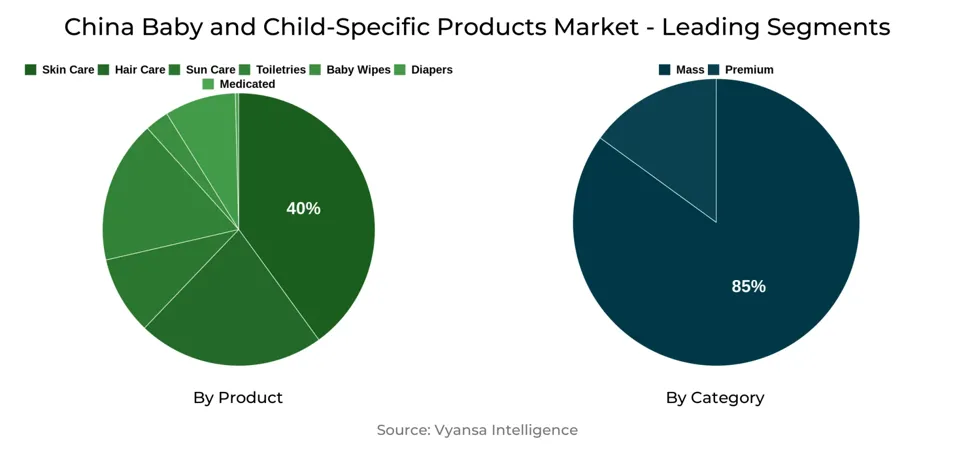
- Skin Care grabbed market share of 40%.
- Competition
- More than 20 companies are actively engaged in producing Baby and Child-Specific Products in China.
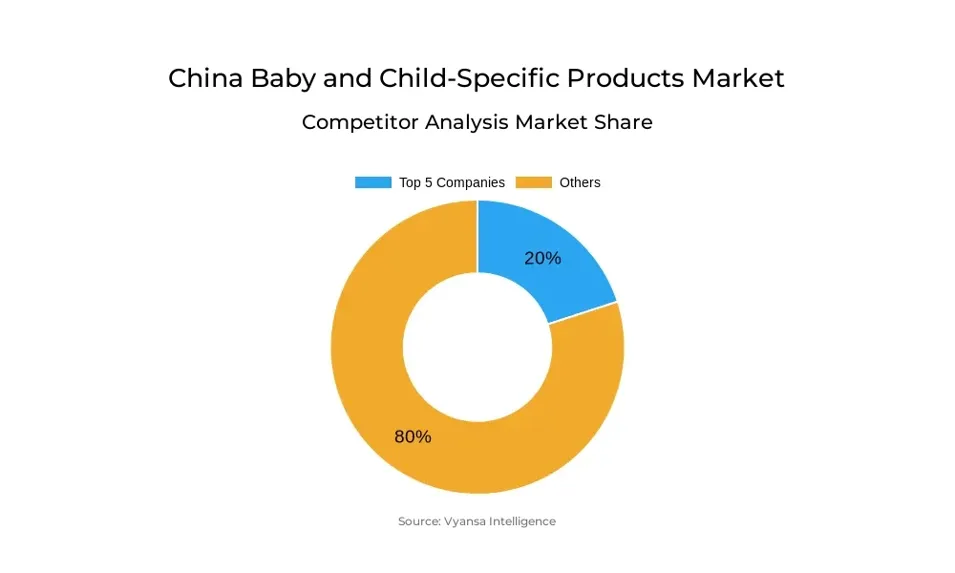
- Top 5 companies acquired around 20% of the market share.
- Zhejiang Yunding Maternal & Child Products Co Ltd, Shanghai MKT-Medicine Co Ltd, China Child Care Corp Ltd, Guangzhou Good Skin Technology Co Ltd, Shanghai Chicmax Cosmetics Co Ltd etc., are few of the top companies.
- Category
- Mass grabbed 85% of the market.
China Baby and Child-Specific Products Market Outlook
The China baby and child-specific products market is expected to grow steadily from an estimated $4.64 billion in 2025 to $4.97 billion by 2032. Growth will be largely driven by premiumisation, as volume sales are projected to remain stable due to the persistently low birth rate. Parents are increasingly willing to invest in higher-quality products for their children, focusing on safety, efficacy, and gentle formulations. Products targeting older children are also expected to gain importance, reflecting shifting demographics within the child population.
Baby and child-specific sun care is anticipated to remain the most dynamic category over the forecast period. Although its penetration was relatively low in 2024, rising end users awareness of the need for sun protection will drive category expansion. Brands offering mineral-based sunscreens, sun gels, and innovative formats such as cushion sunscreens are expected to attract parents seeking both safety and comfort for their children. Skin care products will continue to hold the largest share, supported by segmentation such as moisturising, soothing, and repairing solutions.
Top five players accounting for approximately 20% of total share. Leading domestic brands like Hi!papa, Dexter, Songda, Bodorme, Runben, and Newpage are expected to consolidate their positions through product innovation, e-commerce marketing, and strong financial backing. Local brands benefit from content-driven social commerce platforms such as Douyin, which help reach parents effectively.
Mass-market products will continue to dominate distribution, capturing around 85% of sales. Retail Online is expected to maintain its lead, supported by social commerce and online marketplaces, while traditional mother and baby stores will continue to see declining shares. Stricter regulatory standards, emphasizing safety, minimalist formulations, and natural ingredients, will shape innovation, with gentle and additive-free products remaining central to parental choice.
China Baby and Child-Specific Products Market Growth DriverRising Awareness of Sun Protection Among Parents
End users in China are increasingly aware of the importance of sun protection for their children, which is driving growth in the baby and child-specific products market. Education initiatives by brands have emphasized daily use of sun care products to protect children from harmful UV exposure. As a result, baby and child-specific sun care has become one of the most dynamic categories, showing strong value growth despite low overall birth rates.
The trend reflects parents prioritization of their children health and well-being, influencing purchase decisions across age groups. Brands such as Hi!papa have introduced highly segmented offerings, including mineral-based sunscreens for safety and sun gels for comfort, further encouraging adoption. Daily incorporation of sun care into children’s routines is now common, and this heightened awareness not only strengthens existing product segments but also opens avenues for innovation in convenience, formulation, and premium positioning.
China Baby and Child-Specific Products Market ChallengeDeclining Birth Rate Limiting Market Expansion
A major challenge facing the China Baby and Child-Specific Products Market is the country persistently low birth rate, which limits the potential end users base. With fewer newborns each year, overall demand for baby and child-specific products is constrained, affecting volume growth. Even as parents are willing to spend more on high-quality products, the declining population limits the total market size, making it harder for brands to achieve large-scale growth.
This demographic shift compels manufacturers to shift strategies from volume-based expansion to value-based growth. Companies now focus on premiumization, innovative formulations, and segmentation to maintain revenue streams despite a shrinking market. Additionally, low birth rates increase competition among brands, as each player must differentiate through product safety, efficacy, and marketing appeal. Balancing pricing and quality to attract parents while navigating a limited population is a persistent challenge that shapes strategic decisions across the market.
Unlock Market Intelligence
Explore the market potential with our data-driven report
China Baby and Child-Specific Products Market TrendPremiumisation in Baby and Child-Specific Care
Premiumisation is a defining trend in the China Baby and Child-Specific Products Market. Parents are increasingly willing to invest in high-quality products that ensure safety, efficacy, and comfort for their children. This shift is driving brands to offer specialized formulations, including natural ingredients, hypoallergenic products, and dermatologically tested skincare that caters to sensitive or eczema-prone skin.
Premium positioning also extends to packaging and product experience, with brands launching thoughtfully designed items that appeal to both children and parents. For instance, cushion-format sunscreens, protective creams, and multifunctional bath-and-body products are increasingly favored for their convenience, effectiveness, and gentle care. As parents associate higher-priced offerings with superior quality and trustworthiness, premiumisation enables brands to capture value, build loyalty, and differentiate in a fragmented market. This trend is expected to guide innovation and marketing strategies throughout the forecast period.
China Baby and Child-Specific Products Market OpportunityStricter Safety Standards Encouraging Product Innovation
Enhanced safety standards are guiding developments and innovations in baby and child-specific products. The 2023 Technical Guidelines for Children’s Cosmetics emphasize the principles of safety first, efficacy essential, and minimalist formula. These regulations set clear requirements for children’s product formulations, creating a framework for safe, reliable, and science-backed products.
Brands that proactively align with these standards can enhance end users trust and gain competitive advantage. This encourages development of gentle, additive-free, dermatologically tested formulations suitable for sensitive skin. Natural ingredients, hypoallergenic solutions, and eco-friendly packaging are expected to be widely adopted, meeting parents’ dual concerns for safety and sustainability. As end users increasingly prioritize efficacy, safety, and transparency, compliance-driven innovation provides a clear opportunity for brands to differentiate, expand premium offerings, and strengthen long-term growth in the market.
Unlock Market Intelligence
Explore the market potential with our data-driven report
China Baby and Child-Specific Products Market Segmentation Analysis
By Product
- Hair Care
- Skin Care
- Sun Care
- Toiletries
- Baby Wipes
- Diapers
- Medicated
The segment with the highest market share under Product Shares is skin care, capturing around 40% of the China baby and child-specific products market. This category includes moisturisers, repairing creams, soothing lotions, and other specialised products designed to protect and nourish children’s sensitive skin. Growth in this segment is driven by increasing parental awareness of skin health, segmentation within product offerings, and the willingness to invest in quality items for children.
Products are increasingly targeting specific needs, such as repairing, soothing, or hydrating, while parents also opt for separate items for hair care and bathing to better cater to their child’s delicate skin. The focus on premium formulations, gentle ingredients, and products designed for specific age groups supports steady value growth, as parents prioritise safety, efficacy, and specialised care for their children’s sensitive skin.
By Category
- Premium
- Mass
The segment with the highest market share under Sales Channel is retail online, capturing around 55% of the China baby and child-specific products market. This growth is driven by the rapid expansion of e-commerce platforms, including social commerce channels like Douyin, which offer convenience, a wide product range, and targeted promotions. Parents increasingly rely on online shopping to access both mass and premium products, with the ability to compare brands, read reviews, and benefit from fast delivery services.
While traditional mother and baby stores have seen declining shares, online retail continues to attract new end userss and supports the expansion of domestic brands such as Hi!papa, Dexter, and Newpage. Additionally, warehouse clubs are emerging as a dynamic channel, complementing online growth by offering bulk purchases and exclusive products, helping brands diversify their distribution strategy.
Top Companies in China Baby and Child-Specific Products Market
The top companies operating in the market include Zhejiang Yunding Maternal & Child Products Co Ltd, Shanghai MKT-Medicine Co Ltd, China Child Care Corp Ltd, Guangzhou Good Skin Technology Co Ltd, Shanghai Chicmax Cosmetics Co Ltd, Wuxi Dexter Bio-tech Co Ltd, Johnson & Johnson China Ltd, Hangzhou Qiandao Lake Tianxin Co Ltd, Pigeon (Shanghai) Co Ltd, Tianjin Yumeijing Group Co Ltd, etc., are the top players operating in the China Baby and Child-Specific Products Market.
Frequently Asked Questions
Related Report
1. Market Segmentation
1.1. Research Scope
1.2. Research Methodology
1.3. Definitions and Assumptions
2. Executive Summary
3. China Baby and Child-Specific Product Market Policies, Regulations, and Standards
4. China Baby and Child-Specific Product Market Dynamics
4.1. Growth Factors
4.2. Challenges
4.3. Trends
4.4. Opportunities
5. China Baby and Child-Specific Product Market Statistics, 2022-2032F
5.1. Market Size & Growth Outlook
5.1.1.By Revenues in US$ Million
5.2. Market Segmentation & Growth Outlook
5.2.1.By Product
5.2.1.1. Hair Care- Market Insights and Forecast 2022-2032, USD Million
5.2.1.2. Skin Care- Market Insights and Forecast 2022-2032, USD Million
5.2.1.3. Sun Care- Market Insights and Forecast 2022-2032, USD Million
5.2.1.4. Toiletries- Market Insights and Forecast 2022-2032, USD Million
5.2.1.5. Baby Wipes- Market Insights and Forecast 2022-2032, USD Million
5.2.1.6. Diapers- Market Insights and Forecast 2022-2032, USD Million
5.2.1.7. Medicated- Market Insights and Forecast 2022-2032, USD Million
5.2.2.By Category
5.2.2.1. Premium- Market Insights and Forecast 2022-2032, USD Million
5.2.2.2. Mass- Market Insights and Forecast 2022-2032, USD Million
5.2.3.By Sales Channel
5.2.3.1. Retail Online- Market Insights and Forecast 2022-2032, USD Million
5.2.3.2. Retail Offline- Market Insights and Forecast 2022-2032, USD Million
5.2.4.By Competitors
5.2.4.1. Competition Characteristics
5.2.4.2. Market Share & Analysis
6. China Baby and Child-Specific Hair Care Product Market Statistics, 2022-2032F
6.1. Market Size & Growth Outlook
6.1.1.By Revenues in US$ Million
6.2. Market Segmentation & Growth Outlook
6.2.1.By Category- Market Insights and Forecast 2022-2032, USD Million
6.2.2.By Sales Channel- Market Insights and Forecast 2022-2032, USD Million
7. China Baby and Child-Specific Skin Care Product Market Statistics, 2022-2032F
7.1. Market Size & Growth Outlook
7.1.1.By Revenues in US$ Million
7.2. Market Segmentation & Growth Outlook
7.2.1.By Category- Market Insights and Forecast 2022-2032, USD Million
7.2.2.By Sales Channel- Market Insights and Forecast 2022-2032, USD Million
8. China Baby and Child-Specific Sun Care Product Market Statistics, 2022-2032F
8.1. Market Size & Growth Outlook
8.1.1.By Revenues in US$ Million
8.2. Market Segmentation & Growth Outlook
8.2.1.By Category- Market Insights and Forecast 2022-2032, USD Million
8.2.2.By Sales Channel- Market Insights and Forecast 2022-2032, USD Million
9. China Baby and Child-Specific Toiletries Product Market Statistics, 2022-2032F
9.1. Market Size & Growth Outlook
9.1.1.By Revenues in US$ Million
9.2. Market Segmentation & Growth Outlook
9.2.1.By Category- Market Insights and Forecast 2022-2032, USD Million
9.2.2.By Sales Channel- Market Insights and Forecast 2022-2032, USD Million
10. China Baby and Child-Specific Baby Wipes Market Statistics, 2022-2032F
10.1. Market Size & Growth Outlook
10.1.1. By Revenues in US$ Million
10.2. Market Segmentation & Growth Outlook
10.2.1. By Category- Market Insights and Forecast 2022-2032, USD Million
10.2.2. By Sales Channel- Market Insights and Forecast 2022-2032, USD Million
11. China Baby and Child-Specific Diapers Market Statistics, 2022-2032F
11.1. Market Size & Growth Outlook
11.1.1. By Revenues in US$ Million
11.2. Market Segmentation & Growth Outlook
11.2.1. By Category- Market Insights and Forecast 2022-2032, USD Million
11.2.2. By Sales Channel- Market Insights and Forecast 2022-2032, USD Million
12. China Baby and Child-Specific Medicated Product Market Statistics, 2022-2032F
12.1. Market Size & Growth Outlook
12.1.1. By Revenues in US$ Million
12.2. Market Segmentation & Growth Outlook
12.2.1. By Category- Market Insights and Forecast 2022-2032, USD Million
12.2.2. By Sales Channel- Market Insights and Forecast 2022-2032, USD Million
13. Competitive Outlook
13.1. Company Profiles
13.1.1. Guangzhou Good Skin Technology Co Ltd
13.1.1.1. Business Description
13.1.1.2. Product Portfolio
13.1.1.3. Collaborations & Alliances
13.1.1.4. Recent Developments
13.1.1.5. Financial Details
13.1.1.6. Others
13.1.2. Shanghai Chicmax Cosmetics Co Ltd
13.1.2.1. Business Description
13.1.2.2. Product Portfolio
13.1.2.3. Collaborations & Alliances
13.1.2.4. Recent Developments
13.1.2.5. Financial Details
13.1.2.6. Others
13.1.3. Wuxi Dexter Bio-tech Co Ltd
13.1.3.1. Business Description
13.1.3.2. Product Portfolio
13.1.3.3. Collaborations & Alliances
13.1.3.4. Recent Developments
13.1.3.5. Financial Details
13.1.3.6. Others
13.1.4. Johnson & Johnson China Ltd
13.1.4.1. Business Description
13.1.4.2. Product Portfolio
13.1.4.3. Collaborations & Alliances
13.1.4.4. Recent Developments
13.1.4.5. Financial Details
13.1.4.6. Others
13.1.5. Hangzhou Qiandao Lake Tianxin Co Ltd
13.1.5.1. Business Description
13.1.5.2. Product Portfolio
13.1.5.3. Collaborations & Alliances
13.1.5.4. Recent Developments
13.1.5.5. Financial Details
13.1.5.6. Others
13.1.6. Zhejiang Yunding Maternal & Child Products Co Ltd
13.1.6.1. Business Description
13.1.6.2. Product Portfolio
13.1.6.3. Collaborations & Alliances
13.1.6.4. Recent Developments
13.1.6.5. Financial Details
13.1.6.6. Others
13.1.7. Shanghai MKT-Medicine Co Ltd
13.1.7.1. Business Description
13.1.7.2. Product Portfolio
13.1.7.3. Collaborations & Alliances
13.1.7.4. Recent Developments
13.1.7.5. Financial Details
13.1.7.6. Others
13.1.8. China Child Care Corp Ltd
13.1.8.1. Business Description
13.1.8.2. Product Portfolio
13.1.8.3. Collaborations & Alliances
13.1.8.4. Recent Developments
13.1.8.5. Financial Details
13.1.8.6. Others
13.1.9. Pigeon (Shanghai) Co Ltd
13.1.9.1. Business Description
13.1.9.2. Product Portfolio
13.1.9.3. Collaborations & Alliances
13.1.9.4. Recent Developments
13.1.9.5. Financial Details
13.1.9.6. Others
13.1.10. Tianjin Yumeijing Group Co Ltd
13.1.10.1.Business Description
13.1.10.2.Product Portfolio
13.1.10.3.Collaborations & Alliances
13.1.10.4.Recent Developments
13.1.10.5.Financial Details
13.1.10.6.Others
14. Disclaimer
| Segment | Sub-Segment |
|---|---|
| By Product |
|
| By Category |
|
| By Sales Channel |
|
Research Methodology
This study followed a structured approach comprising four key phases to assess the size and scope of the electro-oxidation market. The process began with thorough secondary research to collect data on the target market, related markets, and broader industry context. These findings, along with preliminary assumptions and estimates, were then validated through extensive primary research involving industry experts from across the value chain. To calculate the overall market size, both top-down and bottom-up methodologies were employed. Finally, market segmentation and data triangulation techniques were applied to refine and validate segment-level estimations.
Secondary Research
The secondary research phase involved gathering data from a wide range of credible and published sources. This step helped in identifying industry trends, defining market segmentation, and understanding the market landscape and value chain.
Sources consulted during this phase included:
- Company annual reports, investor presentations, and press releases
- Industry white papers and certified publications
- Trade directories and market-recognized databases
- Articles from authoritative authors and reputable journals
- Gold and silver standard websites
Secondary research was critical in mapping out the industry's value chain and monetary flow, identifying key market segments, understanding regional variations, and tracking significant industry developments.
Other key sources:
- Financial disclosures
- Industry associations and trade bodies
- News outlets and business magazines
- Academic journals and research studies
- Paid industry databases
Primary Research
To validate secondary data and gain deeper market insights, primary research was conducted with key stakeholders across both the supply and demand sides of the market.
On the demand side, participants included decision-makers and influencers from end-user industries—such as CIOs, CTOs, and CSOs—who provided first-hand perspectives on market needs, product usage, and future expectations.
On the supply side, interviews were conducted with manufacturers, industry associations, and institutional participants to gather insights into current offerings, product pipelines, and market challenges.
Primary interviews provided critical inputs such as:
- Market size and revenue data
- Product and service breakdowns
- Market forecasts
- Regional and application-specific trends
Stakeholders consulted included:
- Leading OEM and solution providers
- Channel and distribution partners
- End users across various applications
- Independent consultants and industry specialists
Market Size Estimation and Data Triangulation
- Identifying Key Market Participants (Secondary Research)
- Goal: To identify the major players or companies in the target market. This typically involves using publicly available data sources such as industry reports, market research publications, and financial statements of companies.
- Tools: Reports from firms like Gartner, Forrester, Euromonitor, Statista, IBISWorld, and others. Public financial statements, news articles, and press releases from top market players.
- Extracting Earnings of Key Market Participants
- Goal: To estimate the earnings generated from the product or service being analyzed. This step helps in understanding the revenue potential of each market player in a specific geography.
- Methods: Earnings data can be gathered from:
- Publicly available financial reports (for listed companies).
- Interviews and primary data sources from professionals, such as Directors, VPs, SVPs, etc. This is especially useful for understanding more nuanced, internal data that isn't publicly disclosed.
- Annual reports and investor presentations of key players.
- Data Collation and Development of a Relevant Data Model
- Goal: To collate inputs from both primary and secondary sources into a structured, data-driven model for market estimation. This model will incorporate key market KPIs and any independent variables relevant to the market.
- Key KPIs: These could include:
- Market size, growth rate, and demand drivers.
- Industry-specific metrics like market share, average revenue per customer (ARPC), or average deal size.
- External variables, such as economic growth rates, inflation rates, or commodity prices, that could affect the market.
- Data Modeling: Based on this data, the market forecasts are developed for the next 5 years. A combination of trend analysis, scenario modeling, and statistical regression might be used to generate projections.
- Scenario Analysis
- Goal: To test different assumptions and validate how sensitive the market is to changes in key variables (e.g., market demand, regulatory changes, technological disruptions).
- Types of Scenarios:
- Base Case: Based on current assumptions and historical data.
- Best-Case Scenario: Assuming favorable market conditions, regulatory environments, and technological advancements.
- Worst-Case Scenario: Accounting for adverse factors, such as economic downturns, stricter regulations, or unexpected disruptions.












