Indonesia Facial Cleanser Market Report: Trends, Growth and Forecast (2026-2032)
By Product Type (Gel Cleanser, Foam Cleanser, Cream Cleanser, Liquid Cleanser, Oil Cleanser, Balm Cleanser, Micellar Cleanser, Powder/Bar Cleanser), By Skin Type (Oily & Acne-Prone Skin, Dry Skin, Sensitive Skin, Combination Skin, Normal Skin), By Ingredient (Conventional, Natural/Organic, Sulfate-Free, Fragrance-Free, Medicated/Active-Based), By Consumer Group (Women, Men, Unisex, Teen), By Distribution Channel (Retail Offline (Supermarkets/Hypermarkets, Pharmacies/Drug Stores, Specialty Beauty Stores, Department Stores), Retail Online (E-commerce Platforms, Brand-Owned Websites (D2C), Online Beauty Retailers)), By Price Point (Mass, Premium, Luxury), By Regions (Sumatra, Java, Kalimantan, Sulawesi, Others) ... Read more
|
Major Players
|
Indonesia Facial Cleanser Market Statistics and Insights, 2026
- Market Size Statistics
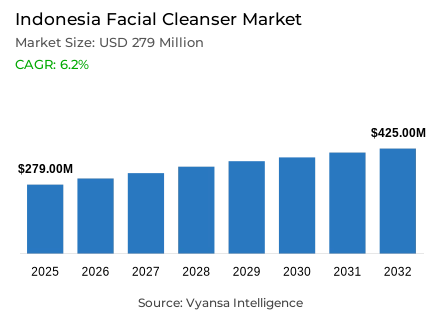
- Facial cleanser market size in Indonesia was valued at USD 279 million in 2025 and is estimated at USD 288 million in 2026.
- The market size is expected to grow to USD 425 million by 2032.
- Market to register a CAGR of around 6.2% during 2026-32.
- Product Type Shares
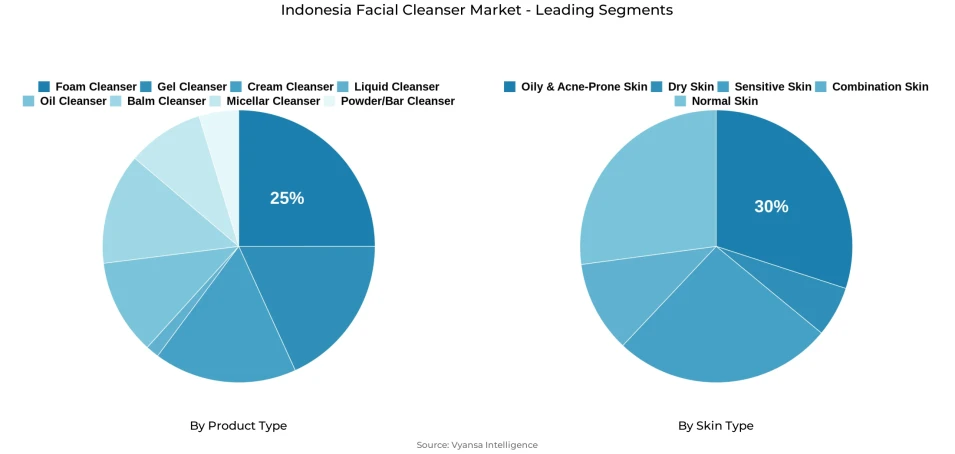
- Foam cleanser grabbed market share of 25%.
- Competition
- More than 10 companies are actively engaged in producing facial cleanser in Indonesia.
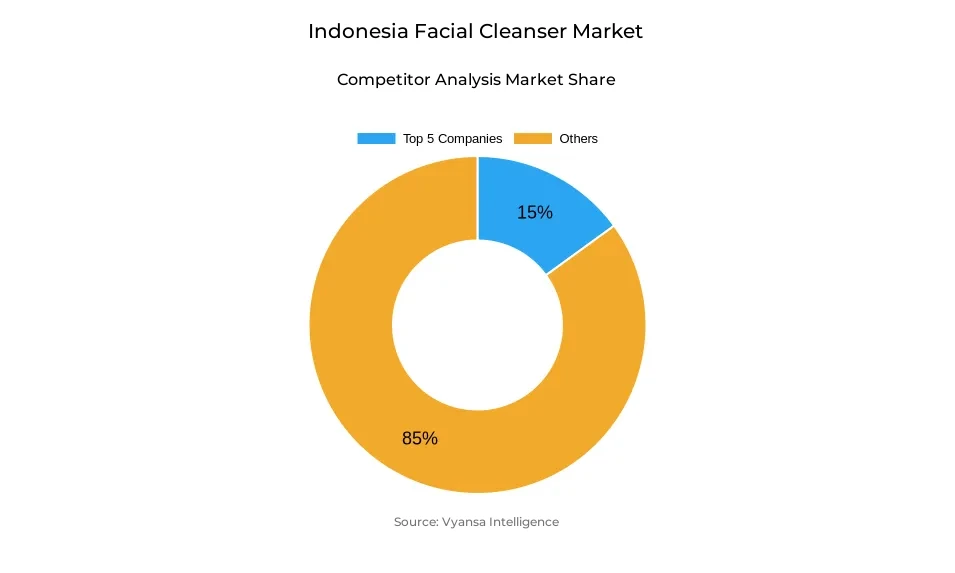
- Top 5 companies acquired around 15% of the market share.
- COSRX INC. , PT Kosmetika Cantik Indonesia , Unilever , HONG KONG SKIN DIVATECH LIMITED , Galderma etc., are few of the top companies.
- Skin Type
- Oily & acne-prone skin grabbed 30% of the market.
Indonesia Facial Cleanser Market Outlook
Indonesia's facial cleanser market achieved USD 279 million valuation in 2025 with expansion projections indicating growth advancement from USD 288 million in 2026 toward USD 425 million by 2032, representing 6.2% CAGR throughout the forecast window. This growth trajectory reflects steady category expansion sustained by rising consumer attention to daily facial cleansing solutions, broader product availability across retail channels, and strengthened product positioning within routine personal care habits. Domestic cosmetics production expansion creates widened consumer access to diverse facial cleanser formats and price points, while growing compliance infrastructure and ingredient innovation support sustained category relevance. The market expansion is underpinned by fundamental demand drivers including young demographic concentration, tropical climate necessity for frequent cleansing, and rising consumer awareness around skincare routines linked to appearance and self-confidence.
Rising domestic cosmetics production establishes strong supply-side expansion supporting increased facial cleanser visibility and accessibility throughout Indonesia. Data from the Ministry of Industry reveals that businesses in Indonesia's cosmetics sector expand by more than 77%, growing from 726 firms in 2020 to 1,292 in 2024, establishing widened producer base supporting frequent product launches and broader price coverage. Evidence indicates that 83% of those businesses classify as micro and small firms, creating diverse market participants capable of responding rapidly to local skincare needs and developing formulations addressing regional consumer preferences. This expanded producer landscape translates to faster innovation cycles, increased competition, and deeper retail penetration for daily facial cleansing solutions across urban and secondary markets.
Product portfolio expansion reflects accelerating formulation activity and competitive intensity across facial cleanser categories. Published data from the Ministry of Industry indicates that registered cosmetic products in Indonesia increase by 50,275 units through October 2025, bringing total registration count to more than 343,000 products. This scale demonstrates stronger formulation development, deeper brand competition, and increasingly active retail environments where facial cleansers benefit from expanded shelf space and consumer choice. Greater product availability supports consumer trial behavior and enables smaller brands to establish market presence through differentiated positioning and targeted consumer engagement, restructuring competitive dynamics away from dominant incumbents and toward fragmented participation enabling niche brand success.
Market segmentation demonstrates pronounced consumer preference for practical formats and targeted skincare solutions addressing visible skin concerns. Foam-based cleansers command 25% market share through superior alignment with Indonesian consumer preferences for familiar, easy-to-use formats that integrate seamlessly into daily facial cleansing routines without complexity. Products formulated for oily and acne-prone skin account for 30% of demand, reflecting consumer prioritization of targeted problem-solving over generic cleansing alone. These segmentation patterns indicate that facial cleanser manufacturers must develop offerings balancing practical usability with functional performance benefits to capture share within increasingly competitive and fragmented market landscapes where product differentiation and clear value communication drive purchasing decisions.
Indonesia Facial Cleanser Market Growth Driver
Local Manufacturing Momentum Strengthens Everyday Demand
Expanding cosmetics production throughout Indonesia creates powerful supply-side drivers that increase facial cleanser availability, visibility, and market penetration across diverse consumer segments. Statistics from the Ministry of Industry confirm that the cosmetics sector experiences 77% business growth between 2020 and 2024, expanding from 726 registered firms to 1,292 active producers establishing substantially widened competitive base. This production expansion directly translates to increased facial cleanser launches, broader price ladder coverage, and faster response cycles to local skincare needs and emerging consumer preferences. Wider producer participation democratizes market access, enabling smaller manufacturers and emerging brands to establish shelf presence and build consumer relationships through direct engagement and differentiated positioning strategies that challenge incumbent market leaders.
Product registration growth reflects accelerating formulation innovation and deepening competitive intensity supporting sustained category expansion. Evidence from the Ministry of Industry demonstrates that registered cosmetic products reach more than 343,000 by October 2025, with 50,275 new registrations reflecting formulation activity and continued brand commitment to facial cleanser portfolios. This product proliferation establishes increasingly active retail environments where facial cleansers benefit from expanded consumer choice, deeper shelf penetration, and stronger visibility supporting awareness and trial adoption. Greater product availability enables consumers to select options precisely matching specific skincare needs and budget constraints, transforming facial cleansing from commodity purchase to differentiated choice supporting premium positioning strategies and ingredient-focused brand building emphasizing local sourcing and functional benefits.
Indonesia Facial Cleanser Market Challenge
Compliance Pressures Keep Operating Costs Elevated
Facial cleanser manufacturers must navigate complex regulatory frameworks encompassing safety compliance, accurate labeling, and emerging halal certification requirements that collectively raise market entry barriers and extend product development timelines. Statistics from National Agency of Drug and Food Control (BPOM) indicate that enforcement activity remains active, with agencies identifying 235 illegal or dangerous cosmetic items worth more than IDR 8.91 billion across four primary Indonesian regions during October-November 2024, establishing that compliance violations carry substantial financial and reputational consequences. This enforcement intensity necessitates rigorous ingredient screening, claims substantiation, and safety testing throughout product development cycles, imposing capital requirements and timeline extensions that disadvantage smaller manufacturers lacking dedicated regulatory affairs resources and compliance expertise.
Emerging halal certification mandates create additional compliance burdens that accelerate preparation costs and extend product launch timelines for facial cleanser brands. Official records from Halal Product Assurance Organizing Agency (BPJPH) confirm that cosmetic products must obtain halal certification after October 17, 2026 under Government Regulation Number 42 of 2024, establishing formal requirement transforming voluntary certification into mandatory market access prerequisite. For facial cleanser manufacturers, this mandate necessitates comprehensive ingredient review, claims alignment with halal principles, detailed documentation, and certification readiness activities that impose substantial preparation costs and extend development cycles. Smaller brands experience disproportionate compliance burden relative to larger competitors, facing slower product launches and higher per-unit preparation costs before facial cleansers reach consumer shelves and generate revenue offsetting regulatory investment.
Unlock Market Intelligence
Explore the market potential with our data-driven report
Indonesia Facial Cleanser Market Trend
Local Ingredients Move Closer to the Core
Market dynamics increasingly reflect consumer preference for facial cleansers incorporating locally sourced ingredients and building brand narratives around Indonesia-based formulation and biotechnology innovation. Analysis from the Ministry of Industry indicates that Cosmetic Day 2025 showcases 43 booths featuring 30 cosmetic SME participants alongside comprehensive raw-material exhibitions highlighting domestic plant extracts and biotechnology innovations. Published data reveals that ingredient showcase highlights local plant extracts including frangipani, cucumber, moringa, patchouli, clove, and lemongrass alongside advanced ingredients like benzoin oil, glycerin, and locally produced surfactants. This government-supported emphasis on domestic sourcing signals clear market trend toward localized product development and ingredient storytelling that resonates with consumers seeking authenticity, sustainability, and connection to Indonesian botanical heritage.
Government positioning of "Local Quality Global" theme reinforces commitment to domestic raw material utilization in facial cleanser formulations and broader cosmetics development. Evidence from the Ministry of Industry confirms strategic government support for local-ingredient positioning as central brand-building foundation, particularly within daily facial cleansing solutions where ingredient transparency and sourcing authenticity drive purchasing decisions. This trend creates competitive advantages for brands developing formulations featuring Indonesian botanical ingredients and biotechnology innovations that differentiate offerings from imported competitors while supporting premium positioning through local sourcing narratives. For skin cleansing products relying heavily on consumer trust and repeat purchase behavior, ingredient sourcing transparency and local content emphasis establish meaningful differentiation opportunities enabling smaller, locally focused brands to compete effectively against larger multinational competitors emphasizing global supply chains and standardized formulations.
Indonesia Facial Cleanser Market Opportunity
Halal Positioning Opens a Larger White Space
Strongest opportunities emerge for facial cleanser manufacturers establishing halal certification readiness before October 17, 2026 regulatory deadline, capturing first-mover advantages and building consumer trust through early compliance demonstration. Research from BPJPH demonstrates that more than 9.8 million products in Indonesia have obtained halal certificates as of October 2025, establishing market awareness of halal certification benefits and consumer familiarity with certified product positioning. Formal certification requirement creates window of opportunity for facial cleanser brands preparing portfolios early, building marketing narratives around safety and halal compliance, and establishing market presence before regulatory mandate forces accelerated competitor responses. Early halal certification enables brands to emphasize product safety, ingredient assurance, and consumer trust benefits that create meaningful differentiation and support premium positioning among quality-conscious consumers prioritizing certified skincare solutions.
Export growth opportunities emerge as halal certification strengthens product credibility across broader regional trade networks and halal-oriented consumer segments. Data from the Ministry of Industry confirms that Indonesia's cosmetic exports reach USD 410 million in 2024, establishing substantial international demand for locally produced facial cleansers and skincare solutions. Evidence from BPJPH indicates that halal certification in cosmetics increases awareness, transparency, and consumer trust supporting expanded market access in halal-conscious regions across Southeast Asia, Middle East, and Muslim-majority markets globally. For facial cleanser producers, halal-certified daily-use products create opportunities to scale operations across both domestic demand and broader halal-oriented trade channels where product safety and ingredient assurance fundamentally shape purchasing decisions. This dual-market opportunity supports profitable growth trajectories where early certification establishes competitive advantages in high-growth export segments while strengthening domestic market positioning through consumer trust and safety credibility.
Unlock Market Intelligence
Explore the market potential with our data-driven report
Indonesia Facial Cleanser Market Segmentation Analysis
By Product Type
- Gel Cleanser
- Foam Cleanser
- Cream Cleanser
- Liquid Cleanser
- Oil Cleanser
- Balm Cleanser
- Micellar Cleanser
- Powder/Bar Cleanser
Foam-based facial cleansers command market leadership at 25% share, establishing clear product type dominance across the Indonesia face wash market landscape. This segment maintains its position as the leading product category due to strong consumer preference for familiar, practical formats that integrate seamlessly into daily facial cleansing routines without requiring special application techniques or extended cleansing procedures. Foam cleansers deliver accessible entry-level positioning supporting mass-market demand while maintaining adequate performance positioning for routine daily use, establishing broad appeal across diverse demographic segments and price-conscious consumers. Consumer preference for foam formats reflects both functional familiarity and sensory expectations established through long-term category participation where lightness, ease of rinsing, and refreshing sensations define category appeal and drive repeat purchase behavior.
This leadership position reflects consumers' continued selection of practical product types that support reliable daily use without complexity or additional preparation steps. Foam cleanser formats support repeated daily application, delivering familiar cleansing experience and accessible price points that encourage routine adoption and sustained usage frequency. The 25% market share indicates that this segment continues shaping product demand, retail merchandising decisions, and brand competitive activity throughout Indonesia's facial cleansing category. As market expansion accelerates and e-commerce facial cleanser channels gain prominence, manufacturers focused on foam format optimization and mass-market positioning are positioned advantageously to capture growth opportunities through product line extensions maintaining core format appeal while addressing specific skin concerns through targeted formulation variations.
By Skin Type
- Oily & Acne-Prone Skin
- Dry Skin
- Sensitive Skin
- Combination Skin
- Normal Skin
The oily and acne-prone skin segment demonstrates commanding market position at 30% share, establishing clear categorical leadership within Indonesia's facial cleanser market skin-type segmentation framework. This dominance reflects consumer prioritization of targeted problem-solving benefits over generic cleansing alone, with consumers actively seeking anti-acne facial cleanser formulations specifically addressing excess oil production, pore congestion, and blemish occurrence. Consumers in this demographic segment expect facial cleansers delivering meaningful oil control benefits, deeper cleansing support for pore clarity, and daily breakout prevention within routine personal care cleansing rituals. Research findings indicate that consumers selecting skin cleansing products addressing oily and acne-prone conditions demonstrate heightened engagement levels, increased willingness to experiment with new brands, and greater brand loyalty when products deliver visible improvement in breakout frequency or oil management.
Product development continues being shaped by performance-driven requirements as manufacturers introduce ingredient sophistication and targeted functionality supporting differentiation within increasingly competitive retail environments. Brands formulating for oily and acne-prone skin segments emphasize specialized actives addressing sebum regulation, pore refinement, and blemish prevention while maintaining skin comfort and barrier support preventing irritation-driven routine abandonment. The 30% market share indicates that this segment continues influencing formulation focus, competitive positioning, and innovation priorities throughout Indonesia's facial cleanser industry. As digital commerce channels expand and direct-to-consumer brands establish presence through social platforms and online retail, consumers seeking product innovation and transparent ingredient information will discover increasing facial cleanser choices tailored to specific skin-type needs and performance expectations. Manufacturers competing within this segment must maintain efficacy positioning through clinical substantiation while ensuring regulatory compliance and continuous product optimization supporting sustained competitive viability where consumer expectations around visible performance results remain exceptionally demanding.
List of Companies Covered in Indonesia Facial Cleanser Market
The companies listed below are highly influential in the Indonesia facial cleanser market, with a significant market share and a strong impact on industry developments.
- COSRX INC.
- PT Kosmetika Cantik Indonesia
- Unilever
- HONG KONG SKIN DIVATECH LIMITED
- Galderma
- FineToday Co. Ltd.
- Paragon Technology and Innovation
- L'Oreal
- PT Beaute Haul Indonesia
- PT Daviena Mandiri Indonesia
Market News & Updates
- Unilever, 2025:
In July 2025, Unilever Indonesia presented POND’S skin science at PIT PERDOSKI XX in Bali. The company said POND’S discussed new technologies for facial skin care. It also highlighted skin microbiome balance and barrier health. This matters for Indonesia’s facial cleanser market because cleansing is skincare’s first step. Unilever’s official POND’S Indonesia pages also show a broad cleanser lineup. These include Bright Boost Facial Foam, Acne Solution Facial Foam, and Energy Charge Face Cleanser. Together, this shows continued brand investment in cleanser-led facial care in Indonesia. It can strengthen product credibility, support dermatologist-backed positioning, and sustain shelf visibility.
- Galderma, 2025:
In August 2025, Galderma launched Cetaphil Nourishing Oil to Foam Cleanser. The company described it as a hydrating cleanser for sensitive skin. It removes makeup, oil, and dirt without stripping moisture. Galderma said the formula also supports the skin moisture barrier. This is relevant for Indonesia because Galderma operates locally through PT Galderma Indonesia Healthcare. Cetaphil Indonesia also officially markets a broad local cleanser portfolio. Its Indonesia cleanser pages list Hydrating Foaming Cream Cleanser, Gentle Skin Cleanser, and Daily Facial Cleanser. For Indonesia’s facial cleanser market, this supports premium sensitive-skin positioning and product choice. It can also improve competition in dermatologist-led cleansing solutions.
Frequently Asked Questions
Related Report
- Market Segmentation
- Research Scope
- Research Methodology
- Definitions and Assumptions
- Executive Summary
- Indonesia Facial Cleanser Market Policies, Regulations, and Standards
- Indonesia Facial Cleanser Market Dynamics
- Growth Factors
- Challenges
- Trends
- Opportunities
- Indonesia Facial Cleanser Market Statistics, 2022-2032F
- Market Size & Growth Outlook
- By Revenues in USD Million
- Market Segmentation & Growth Outlook
- By Product Type
- Gel Cleanser- Market Insights and Forecast 2022-2032, USD Million
- Foam Cleanser- Market Insights and Forecast 2022-2032, USD Million
- Cream Cleanser- Market Insights and Forecast 2022-2032, USD Million
- Liquid Cleanser- Market Insights and Forecast 2022-2032, USD Million
- Oil Cleanser- Market Insights and Forecast 2022-2032, USD Million
- Balm Cleanser- Market Insights and Forecast 2022-2032, USD Million
- Micellar Cleanser- Market Insights and Forecast 2022-2032, USD Million
- Powder/Bar Cleanser- Market Insights and Forecast 2022-2032, USD Million
- By Skin Type
- Oily & Acne-Prone Skin- Market Insights and Forecast 2022-2032, USD Million
- Dry Skin- Market Insights and Forecast 2022-2032, USD Million
- Sensitive Skin- Market Insights and Forecast 2022-2032, USD Million
- Combination Skin- Market Insights and Forecast 2022-2032, USD Million
- Normal Skin- Market Insights and Forecast 2022-2032, USD Million
- By Ingredient
- Conventional- Market Insights and Forecast 2022-2032, USD Million
- Natural/Organic- Market Insights and Forecast 2022-2032, USD Million
- Sulfate-Free- Market Insights and Forecast 2022-2032, USD Million
- Fragrance-Free- Market Insights and Forecast 2022-2032, USD Million
- Medicated/Active-Based- Market Insights and Forecast 2022-2032, USD Million
- By Consumer Group
- Women- Market Insights and Forecast 2022-2032, USD Million
- Men- Market Insights and Forecast 2022-2032, USD Million
- Unisex- Market Insights and Forecast 2022-2032, USD Million
- Teen- Market Insights and Forecast 2022-2032, USD Million
- By Distribution Channel
- Retail Offline- Market Insights and Forecast 2022-2032, USD Million
- Supermarkets/Hypermarkets- Market Insights and Forecast 2022-2032, USD Million
- Pharmacies/Drug Stores- Market Insights and Forecast 2022-2032, USD Million
- Specialty Beauty Stores- Market Insights and Forecast 2022-2032, USD Million
- Department Stores- Market Insights and Forecast 2022-2032, USD Million
- Retail Online- Market Insights and Forecast 2022-2032, USD Million
- E-commerce Platforms- Market Insights and Forecast 2022-2032, USD Million
- Brand-Owned Websites (D2C)- Market Insights and Forecast 2022-2032, USD Million
- Online Beauty Retailers- Market Insights and Forecast 2022-2032, USD Million
- Retail Offline- Market Insights and Forecast 2022-2032, USD Million
- By Price Point
- Mass- Market Insights and Forecast 2022-2032, USD Million
- Premium- Market Insights and Forecast 2022-2032, USD Million
- Luxury- Market Insights and Forecast 2022-2032, USD Million
- By Regions
- Sumatra- Market Insights and Forecast 2022-2032, USD Million
- Java- Market Insights and Forecast 2022-2032, USD Million
- Kalimantan- Market Insights and Forecast 2022-2032, USD Million
- Sulawesi- Market Insights and Forecast 2022-2032, USD Million
- Others- Market Insights and Forecast 2022-2032, USD Million
- By Competitors
- Competition Characteristics
- Market Share & Analysis
- By Product Type
- Market Size & Growth Outlook
- Indonesia Gel Cleanser Market Statistics, 2022-2032
- Market Size & Growth Outlook
- By Revenues in USD Million
- Market Segmentation & Growth Outlook
- By Skin Type- Market Insights and Forecast 2022-2032, USD Million
- By Ingredient- Market Insights and Forecast 2022-2032, USD Million
- By Consumer Group- Market Insights and Forecast 2022-2032, USD Million
- By Distribution Channel- Market Insights and Forecast 2022-2032, USD Million
- By Price Point- Market Insights and Forecast 2022-2032, USD Million
- By Regions- Market Insights and Forecast 2022-2032, USD Million
- Market Size & Growth Outlook
- Indonesia Foam Cleanser Market Statistics, 2022-2032
- Market Size & Growth Outlook
- By Revenues in USD Million
- Market Segmentation & Growth Outlook
- By Skin Type- Market Insights and Forecast 2022-2032, USD Million
- By Ingredient- Market Insights and Forecast 2022-2032, USD Million
- By Consumer Group- Market Insights and Forecast 2022-2032, USD Million
- By Distribution Channel- Market Insights and Forecast 2022-2032, USD Million
- By Price Point- Market Insights and Forecast 2022-2032, USD Million
- By Regions- Market Insights and Forecast 2022-2032, USD Million
- Market Size & Growth Outlook
- Indonesia Cream Cleanser Market Statistics, 2022-2032
- Market Size & Growth Outlook
- By Revenues in USD Million
- Market Segmentation & Growth Outlook
- By Skin Type- Market Insights and Forecast 2022-2032, USD Million
- By Ingredient- Market Insights and Forecast 2022-2032, USD Million
- By Consumer Group- Market Insights and Forecast 2022-2032, USD Million
- By Distribution Channel- Market Insights and Forecast 2022-2032, USD Million
- By Price Point- Market Insights and Forecast 2022-2032, USD Million
- By Regions- Market Insights and Forecast 2022-2032, USD Million
- Market Size & Growth Outlook
- Indonesia Liquid Cleanser Market Statistics, 2022-2032
- Market Size & Growth Outlook
- By Revenues in USD Million
- Market Segmentation & Growth Outlook
- By Skin Type- Market Insights and Forecast 2022-2032, USD Million
- By Ingredient- Market Insights and Forecast 2022-2032, USD Million
- By Consumer Group- Market Insights and Forecast 2022-2032, USD Million
- By Distribution Channel- Market Insights and Forecast 2022-2032, USD Million
- By Price Point- Market Insights and Forecast 2022-2032, USD Million
- By Regions- Market Insights and Forecast 2022-2032, USD Million
- Market Size & Growth Outlook
- Indonesia Oil Cleanser Market Statistics, 2022-2032
- Market Size & Growth Outlook
- By Revenues in USD Million
- Market Segmentation & Growth Outlook
- By Skin Type- Market Insights and Forecast 2022-2032, USD Million
- By Ingredient- Market Insights and Forecast 2022-2032, USD Million
- By Consumer Group- Market Insights and Forecast 2022-2032, USD Million
- By Distribution Channel- Market Insights and Forecast 2022-2032, USD Million
- By Price Point- Market Insights and Forecast 2022-2032, USD Million
- By Regions- Market Insights and Forecast 2022-2032, USD Million
- Market Size & Growth Outlook
- Indonesia Balm Cleanser Market Statistics, 2022-2032
- Market Size & Growth Outlook
- By Revenues in USD Million
- Market Segmentation & Growth Outlook
- By Skin Type- Market Insights and Forecast 2022-2032, USD Million
- By Ingredient- Market Insights and Forecast 2022-2032, USD Million
- By Consumer Group- Market Insights and Forecast 2022-2032, USD Million
- By Distribution Channel- Market Insights and Forecast 2022-2032, USD Million
- By Price Point- Market Insights and Forecast 2022-2032, USD Million
- By Regions- Market Insights and Forecast 2022-2032, USD Million
- Market Size & Growth Outlook
- Indonesia Micellar Cleanser Market Statistics, 2022-2032
- Market Size & Growth Outlook
- By Revenues in USD Million
- Market Segmentation & Growth Outlook
- By Skin Type- Market Insights and Forecast 2022-2032, USD Million
- By Ingredient- Market Insights and Forecast 2022-2032, USD Million
- By Consumer Group- Market Insights and Forecast 2022-2032, USD Million
- By Distribution Channel- Market Insights and Forecast 2022-2032, USD Million
- By Price Point- Market Insights and Forecast 2022-2032, USD Million
- By Regions- Market Insights and Forecast 2022-2032, USD Million
- Market Size & Growth Outlook
- Indonesia Powder/Bar Cleanser Market Statistics, 2022-2032
- Market Size & Growth Outlook
- By Revenues in USD Million
- Market Segmentation & Growth Outlook
- By Skin Type- Market Insights and Forecast 2022-2032, USD Million
- By Ingredient- Market Insights and Forecast 2022-2032, USD Million
- By Consumer Group- Market Insights and Forecast 2022-2032, USD Million
- By Distribution Channel- Market Insights and Forecast 2022-2032, USD Million
- By Price Point- Market Insights and Forecast 2022-2032, USD Million
- By Regions- Market Insights and Forecast 2022-2032, USD Million
- Market Size & Growth Outlook
- Competitive Outlook
- Company Profiles
- HONG KONG SKIN DIVATECH LIMITED
- Business Description
- Product Portfolio
- Collaborations & Alliances
- Recent Developments
- Financial Details
- Others
- Galderma
- Business Description
- Product Portfolio
- Collaborations & Alliances
- Recent Developments
- Financial Details
- Others
- Paragon Technology and Innovation
- Business Description
- Product Portfolio
- Collaborations & Alliances
- Recent Developments
- Financial Details
- Others
- FineToday Co., Ltd.
- Business Description
- Product Portfolio
- Collaborations & Alliances
- Recent Developments
- Financial Details
- Others
- L'Oreal
- Business Description
- Product Portfolio
- Collaborations & Alliances
- Recent Developments
- Financial Details
- Others
- COSRX INC.
- Business Description
- Product Portfolio
- Collaborations & Alliances
- Recent Developments
- Financial Details
- Others
- PT Kosmetika Cantik Indonesia
- Business Description
- Product Portfolio
- Collaborations & Alliances
- Recent Developments
- Financial Details
- Others
- Unilever
- Business Description
- Product Portfolio
- Collaborations & Alliances
- Recent Developments
- Financial Details
- Others
- PT Beaute Haul Indonesia
- Business Description
- Product Portfolio
- Collaborations & Alliances
- Recent Developments
- Financial Details
- Others
- PT Daviena Mandiri Indonesia
- Business Description
- Product Portfolio
- Collaborations & Alliances
- Recent Developments
- Financial Details
- Others
- HONG KONG SKIN DIVATECH LIMITED
- Company Profiles
- Disclaimer
| Segment | Sub-Segment |
|---|---|
| By Product Type |
|
| By Skin Type |
|
| By Ingredient |
|
| By Consumer Group |
|
| By Distribution Channel |
|
| By Price Point |
|
| By Regions |
|
Research Methodology
This study followed a structured approach comprising four key phases to assess the size and scope of the electro-oxidation market. The process began with thorough secondary research to collect data on the target market, related markets, and broader industry context. These findings, along with preliminary assumptions and estimates, were then validated through extensive primary research involving industry experts from across the value chain. To calculate the overall market size, both top-down and bottom-up methodologies were employed. Finally, market segmentation and data triangulation techniques were applied to refine and validate segment-level estimations.
Secondary Research
The secondary research phase involved gathering data from a wide range of credible and published sources. This step helped in identifying industry trends, defining market segmentation, and understanding the market landscape and value chain.
Sources consulted during this phase included:
- Company annual reports, investor presentations, and press releases
- Industry white papers and certified publications
- Trade directories and market-recognized databases
- Articles from authoritative authors and reputable journals
- Gold and silver standard websites
Secondary research was critical in mapping out the industry's value chain and monetary flow, identifying key market segments, understanding regional variations, and tracking significant industry developments.
Other key sources:
- Financial disclosures
- Industry associations and trade bodies
- News outlets and business magazines
- Academic journals and research studies
- Paid industry databases
Primary Research
To validate secondary data and gain deeper market insights, primary research was conducted with key stakeholders across both the supply and demand sides of the market.
On the demand side, participants included decision-makers and influencers from end-user industries—such as CIOs, CTOs, and CSOs—who provided first-hand perspectives on market needs, product usage, and future expectations.
On the supply side, interviews were conducted with manufacturers, industry associations, and institutional participants to gather insights into current offerings, product pipelines, and market challenges.
Primary interviews provided critical inputs such as:
- Market size and revenue data
- Product and service breakdowns
- Market forecasts
- Regional and application-specific trends
Stakeholders consulted included:
- Leading OEM and solution providers
- Channel and distribution partners
- End users across various applications
- Independent consultants and industry specialists
Market Size Estimation and Data Triangulation
- Identifying Key Market Participants (Secondary Research)
- Goal: To identify the major players or companies in the target market. This typically involves using publicly available data sources such as industry reports, market research publications, and financial statements of companies.
- Tools: Reports from firms like Gartner, Forrester, Euromonitor, Statista, IBISWorld, and others. Public financial statements, news articles, and press releases from top market players.
- Extracting Earnings of Key Market Participants
- Goal: To estimate the earnings generated from the product or service being analyzed. This step helps in understanding the revenue potential of each market player in a specific geography.
- Methods: Earnings data can be gathered from:
- Publicly available financial reports (for listed companies).
- Interviews and primary data sources from professionals, such as Directors, VPs, SVPs, etc. This is especially useful for understanding more nuanced, internal data that isn't publicly disclosed.
- Annual reports and investor presentations of key players.
- Data Collation and Development of a Relevant Data Model
- Goal: To collate inputs from both primary and secondary sources into a structured, data-driven model for market estimation. This model will incorporate key market KPIs and any independent variables relevant to the market.
- Key KPIs: These could include:
- Market size, growth rate, and demand drivers.
- Industry-specific metrics like market share, average revenue per customer (ARPC), or average deal size.
- External variables, such as economic growth rates, inflation rates, or commodity prices, that could affect the market.
- Data Modeling: Based on this data, the market forecasts are developed for the next 5 years. A combination of trend analysis, scenario modeling, and statistical regression might be used to generate projections.
- Scenario Analysis
- Goal: To test different assumptions and validate how sensitive the market is to changes in key variables (e.g., market demand, regulatory changes, technological disruptions).
- Types of Scenarios:
- Base Case: Based on current assumptions and historical data.
- Best-Case Scenario: Assuming favorable market conditions, regulatory environments, and technological advancements.
- Worst-Case Scenario: Accounting for adverse factors, such as economic downturns, stricter regulations, or unexpected disruptions.












