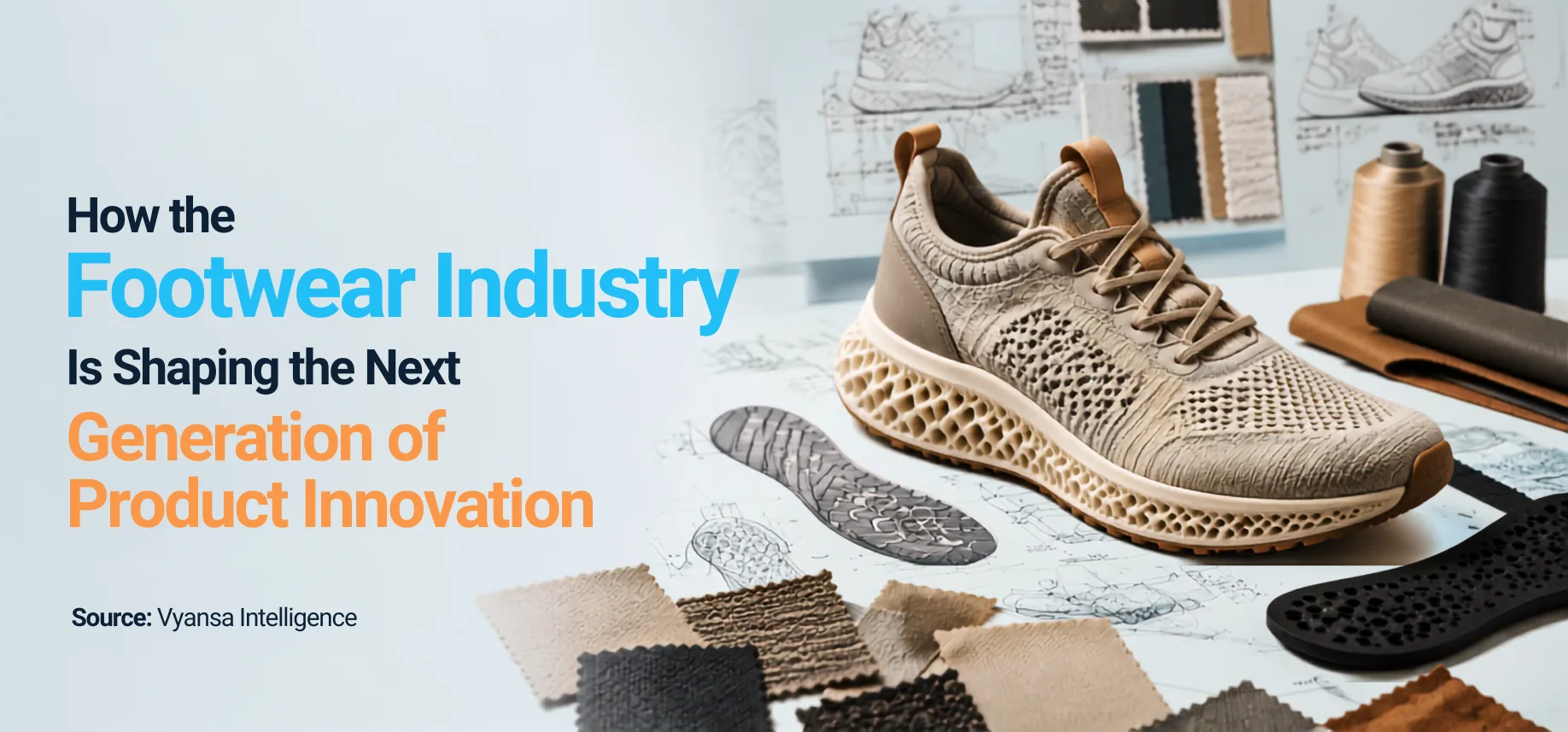
How the Footwear Industry Is Shaping the Next Generation of Product Innovation
July 17, 2026
Footwear has evolved into one of the most innovation-intensive product categories within the global consumer goods sector. While protection, durability, and comfort remain fundamental product requirements, competition is increasingly defined by engineering capabilities, material selection, product architecture, and differentiated design strategies. Innovation is no longer confined to premium athletic footwear. It now shapes product development across casual, formal, outdoor, children's, and lifestyle categories, where each segment demands distinct functional and commercial value.
This transformation reflects a broader shift across the footwear value chain. Manufacturers are refining production processes, product developers are integrating performance-led technologies into everyday footwear, and brands are building specialized portfolios that address diverse wearing occasions instead of relying on generalized product offerings. Product innovation has therefore become a strategic capability that supports competitive differentiation, premium positioning, and long-term business growth.
The commercial significance of this evolution is reflected in industry expansion. The global footwear market was valued at USD 359.1 billion in 2025 and is projected to reach USD 439.95 billion by 2032, registering a CAGR of 2.94% from 2026 to 2032. Future growth will increasingly depend on how effectively companies combine performance, comfort, material quality, product versatility, and digital purchasing confidence into commercially successful product portfolios.
Why Product Innovation Is Moving Beyond Basic Functionality
Product innovation has expanded well beyond improving appearance or introducing seasonal collections. Modern footwear is expected to perform consistently across different environments while delivering durability, comfort, versatility, and visual appeal throughout its lifecycle. As a result, product development has become increasingly application-driven, with manufacturers designing footwear around specific movement patterns, user requirements, and wearing conditions.
This shift has encouraged companies to move away from standardized product platforms in favor of category-specific engineering approaches. Product roadmaps now integrate material science, structural design, ergonomics, and manufacturing precision to create differentiated products that deliver measurable performance advantages across multiple use cases.
Key priorities shaping footwear product development include:
-
Functional performance: Delivering stability, flexibility, impact protection, and long-wear comfort across intended applications.
-
Multi-occasion usability: Designing products that transition effectively between work, travel, leisure, and everyday activities.
-
Purpose-built engineering: Developing category-specific structures instead of adapting a single design across multiple product segments.
-
Long-term durability: Improving construction quality and component integration to extend product lifespan.
-
Distinct product positioning: Creating clearly differentiated offerings that address specific performance and lifestyle requirements.
As product portfolios continue to diversify, successful innovation increasingly depends on aligning engineering decisions with how footwear will actually be used rather than how it will simply appear at retail. This approach enables manufacturers to strengthen product differentiation while responding more effectively to changing performance expectations across global markets.
How Product Segmentation Is Driving Innovation Across Footwear Categories
Footwear categories have become significantly more specialized as manufacturers develop products for increasingly distinct applications. Rather than treating innovation as a uniform process, companies now prioritize category-specific development strategies that reflect different movement patterns, environmental conditions, replacement cycles, and performance expectations.
Segmentation enables more efficient allocation of research, engineering, and material investments while improving product relevance across diverse customer requirements. It also allows manufacturers to build stronger product portfolios by aligning technical capabilities with clearly defined usage scenarios.
|
Footwear Category |
Primary Product Focus |
|
Athletic Footwear |
Running efficiency, cushioning, stability, lightweight construction, and grip |
|
Casual Footwear |
Everyday comfort, flexibility, versatility, contemporary styling |
|
Formal Footwear |
Premium materials, structural integrity, finish quality, durability |
|
Sandals and Slippers |
Ease of wear, ventilation, lightweight comfort, climate suitability |
|
Boots and Outdoor Footwear |
Weather protection, traction, durability, and rugged performance |
|
Children's Footwear |
Fit accuracy, flexibility, safety, durability, and frequent replacement needs |
Each category follows a different product development philosophy. A running shoe requires engineered cushioning, responsive midsoles, and lightweight construction to support continuous movement. Formal footwear places greater emphasis on structural integrity, material finish, and long-term shape retention, while outdoor footwear prioritizes traction, weather resistance, and durability across demanding environments. Children's footwear, meanwhile, focuses on flexibility, accurate fit, and construction capable of withstanding frequent daily use.
Differences illustrate why category segmentation has become a strategic driver of product innovation rather than simply a merchandising framework. By developing products around clearly defined functional requirements, manufacturers can optimize material selection, component integration, and manufacturing processes for each category instead of relying on generalized design approaches.
Comfort Engineering Has Become a Core Product Differentiator
Comfort has become a defining benchmark in footwear product development. While design attracts initial attention, long-term product value depends on how consistently footwear performs throughout daily use. Manufacturers now approach comfort as an engineering objective that influences every stage of product development.
Rather than relying on cushioning alone, developers optimize multiple structural elements to improve movement, stability, and wearing experience. A well-engineered product balances flexibility, support, breathability, and weight without compromising durability.
Key engineering priorities include:
-
Impact management: Cushioning systems that reduce stress during walking, commuting, and prolonged standing.
-
Upper adaptability: Flexible materials that move naturally with the foot while maintaining structural support.
-
Breathability: Engineered uppers that improve airflow across different climates.
-
Foot support: Anatomically designed footbeds that distribute pressure evenly.
-
Weight optimization: Lightweight components that improve comfort without reducing durability.
Comfort engineering now influences product positioning across athletic, casual, formal, and outdoor footwear. Products that deliver a consistent wearing experience are more likely to strengthen customer satisfaction and encourage repeat purchases.
Performance Technologies Are Reshaping Everyday Footwear Products
Performance technologies developed for competitive sports are now influencing a much broader range of footwear products. Features once limited to running and training shoes are increasingly incorporated into products designed for office wear, travel, commuting, and everyday use.
Manufacturers are extending proven engineering solutions across multiple categories instead of restricting innovation to specialized collections. This approach improves functionality while creating stronger differentiation across increasingly competitive product portfolios. Performance technologies becoming more widely adopted include:
-
Advanced cushioning systems that improve comfort during extended daily movement.
-
Enhanced traction patterns that provide greater grip across different walking surfaces.
-
Lightweight construction that reduces fatigue without compromising durability.
-
Stability components that improve balance during prolonged wear.
-
Optimized sole geometry that supports smoother and more efficient movement.
Several manufacturers continue to demonstrate this transition. Nike's Project Amplify explores powered footwear designed to support walking and running through assisted movement technologies. Likewise, Adidas Adizero Adios Pro Evo 3 highlights how innovations developed for elite competition continue to influence lightweight construction and responsive performance across broader footwear portfolios.
Performance engineering is no longer exclusive to athletic footwear. Manufacturers are adapting established technologies to improve comfort, efficiency, and functionality across lifestyle, travel, casual, and formal categories.
How Material Selection Shapes Footwear Performance and Product Positioning
Material selection plays a central role in determining how footwear performs, how efficiently it is manufactured, and how it is positioned across different price segments. Every component contributes differently to durability, flexibility, appearance, weight, and long-term product quality.
Instead of applying common specifications across multiple product lines, manufacturers select material combinations according to the functional requirements of each footwear category. Material strategy has therefore become an important product development decision rather than a sourcing exercise. Manufacturers are also incorporating recycled polyester fibers into footwear uppers to reduce dependence on virgin raw materials while maintaining durability and product performance.
|
Material Area |
Primary Product Role |
Strategic Value |
|
Leather and Premium Synthetics |
Shape retention, finish quality, structural support |
Strengthens premium and formal footwear positioning |
|
Engineered Mesh and Knit Textiles |
Flexibility, airflow, lightweight construction |
Improves comfort across athletic and casual footwear |
|
Rubber and Advanced Sole Compounds |
Grip, traction, abrasion resistance |
Enhances durability and surface performance |
|
EVA, PU, and TPU |
Cushioning, rebound, structural support |
Improves comfort, stability, and movement efficiency |
|
Recycled Fibers |
Reduce dependence on virgin raw materials |
Supports responsible product development objectives |
Material choices also influence production efficiency and product consistency. Lightweight textiles simplify upper construction, while advanced polymers improve cushioning performance without adding unnecessary weight. Premium leather continues to provide structural strength and refined finishes for formal footwear, whereas engineered textiles enhance flexibility across athletic and casual products.
Premium leather and premium synthetic materials continue to support structural strength, durability, flexibility, and refined finishes across multiple footwear categories. ASICS' NIMBUS MIRAI demonstrates how material selection can also support product lifecycle planning through remanufacturing-oriented design. Beyond responsible sourcing, effective material strategies help manufacturers improve product performance, manufacturing consistency, and category differentiation across diverse footwear portfolios.
Product Quality Is Defining Premium Footwear Positioning
Premium footwear is no longer distinguished solely by higher prices or luxury materials. Manufacturers are strengthening premium positioning through engineering quality, durable construction, material consistency, and products that remain relevant across multiple occasions.
Rather than developing products around short-term fashion cycles, brands are investing in footwear that delivers lasting functional value. Strong construction, reliable performance, and versatile design have become equally important in supporting premium product portfolios.
Key priorities influencing premium product development include:
-
Material quality: High-performance leather, engineered textiles, and durable synthetic alternatives.
-
Construction standards: Better stitching, bonding, and finishing for longer product life.
-
Versatile design: Products suitable for professional, travel, and everyday use.
-
Consistent quality: Manufacturing precision that strengthens customer confidence.
-
Brand value: Products that encourage repeat purchases through dependable performance.
Digital Retail Is Demanding Better Product Communication
Digital commerce has expanded the importance of product information beyond images and specifications. Since customers cannot physically evaluate footwear before purchase, product pages must communicate fit, functionality, and performance with greater precision. Manufacturers and retailers are improving digital experiences by presenting technical product details in a way that simplifies purchasing decisions while reducing uncertainty and unnecessary returns.
High-performing product pages typically communicate:
-
Fit guidance: Width profiles and sizing recommendations.
-
Primary applications: Office, walking, travel, sports, outdoor, or casual use.
-
Material characteristics: Flexibility, breathability, finish, and structural support.
-
Performance details: Cushioning, grip, stability, and product weight.
-
Customer support: Size exchanges and fit-related assistance.
Clear product communication strengthens purchasing confidence while improving inventory management and supporting more efficient omnichannel operations.
Competitive Strategies Reflect Diverse Paths to Product Leadership
Leading footwear companies continue to strengthen their competitive position through distinct product strategies rather than uniform portfolio expansion. Performance engineering, retail accessibility, craftsmanship, and outdoor specialization each represent different approaches to building long-term market presence.
Organizations increasingly focus on areas where they can develop stronger product differentiation instead of competing equally across every footwear category.
|
Company |
Established Year |
Strategic Footwear Strength |
|
Deichmann SE |
1913 |
Extensive retail network supported by broad category coverage and product accessibility across European markets. |
|
Misto Holdings Corp. (Formerly FILA Holdings Corp.) |
1991 |
Lifestyle and sports footwear portfolio strengthened by established brands and strong presence across Asian markets. |
|
Adidas AG |
1949 |
Global leadership in performance technologies, lightweight construction, and sports-led product engineering. |
|
ASICS Corp. |
1949 |
Advanced running expertise supported by biomechanical research and continuous footwear engineering. |
|
Bata Corporation |
1894 |
Diversified everyday footwear portfolio backed by extensive retail operations and broad consumer reach. |
|
Columbia Sportswear |
1938 |
Technical outdoor footwear focused on durability, weather protection, and trail performance. |
Although each company follows a different commercial strategy, sustained competitiveness depends on continuous investment in product engineering, material selection, manufacturing capabilities, and category specialization. These capabilities enable companies to differentiate their portfolios while responding to evolving performance and lifestyle requirements across the footwear industry.
Priorities That Will Define the Next Stage of Product Development
Future product development will depend on how effectively manufacturers integrate engineering expertise, manufacturing capabilities, digital technologies, and operational efficiency into scalable product strategies. Competitive advantage will increasingly come from delivering measurable product improvements rather than introducing incremental design changes.
Priorities that are expected to influence product development include:
-
Multi-functional products that perform consistently across work, travel, lifestyle, and recreational use.
-
Performance integration across athletic, casual, formal, and outdoor footwear categories.
-
Digitally supported purchasing experiences through improved fit communication and technical product information.
-
Manufacturing efficiency that supports innovation without compromising quality or production consistency.
-
Lifecycle-focused engineering that extends product durability and long-term value.
Manufacturers capable of balancing technical innovation with commercial scalability will be better positioned to strengthen competitiveness across global footwear portfolios.
Conclusion
Product innovation has become the foundation of competitive differentiation across the footwear industry. Success is increasingly determined by the ability to combine engineering expertise, material strategy, performance technologies, manufacturing precision, and digital retail capabilities into products that deliver consistent value throughout their lifecycle. Innovation is no longer confined to a single footwear category or product feature. It extends across design, materials, production processes, category specialization, and customer experience, creating opportunities for manufacturers to strengthen both product performance and commercial positioning.
Companies that align product development with evolving performance expectations while maintaining manufacturing efficiency and portfolio differentiation will be better equipped to compete in an increasingly sophisticated footwear landscape.