Turkey Bags and Luggage Market Report: Trends, Growth and Forecast (2026-2032)
By Category (Bags (Cross Body Bags, Bags and Backpacks, Business Bags, Duffle Bags, Clutches, Others), Luggage (Soft Luggage, Hard Luggage, Wheeled Luggage, Non-Wheeled Luggage)), By Sales Channel (Retail Offline, Retail Online), By Material Type (Soft Case (Nylon, Polyester, Ballistic Nylon), Hard Case (Polycarbonate, ABS (Acrylonitrile Butadiene Styrene), Polypropylene)), By Price Category (Luxury, Mass/Economy, Premium), By Application (Travel, Business) ... Read more
|
Major Players
|
Turkey Bags and Luggage Market Statistics and Insights, 2026
- Market Size Statistics
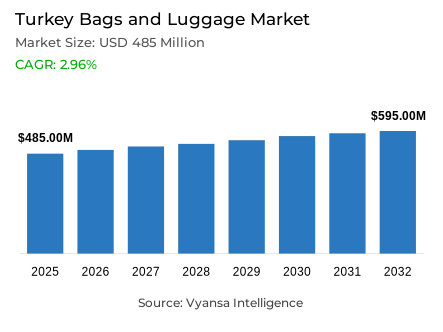
- Bags and luggage market size in Turkey was estimated at USD 485 million in 2025.
- The market size is expected to grow to USD 595 million by 2032.
- Market to register a CAGR of around 2.96% during 2026-32.
- Category Shares
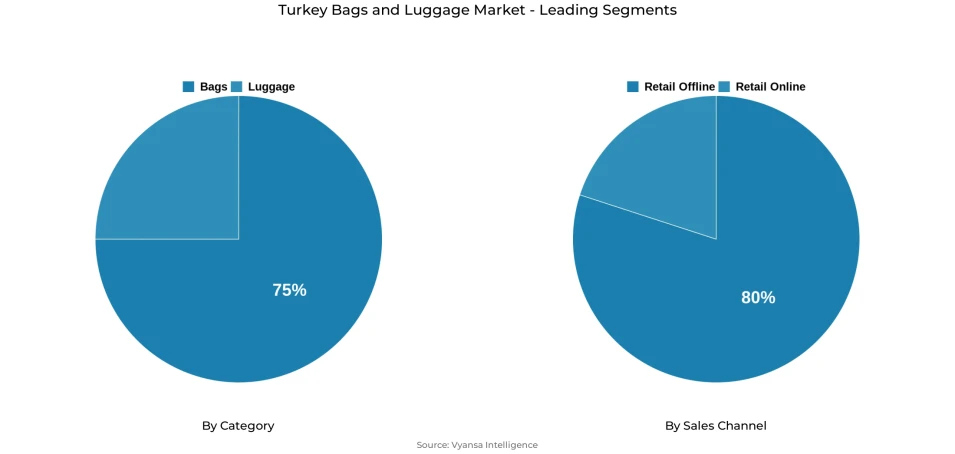
- Bags grabbed market share of 75%.
- Competition
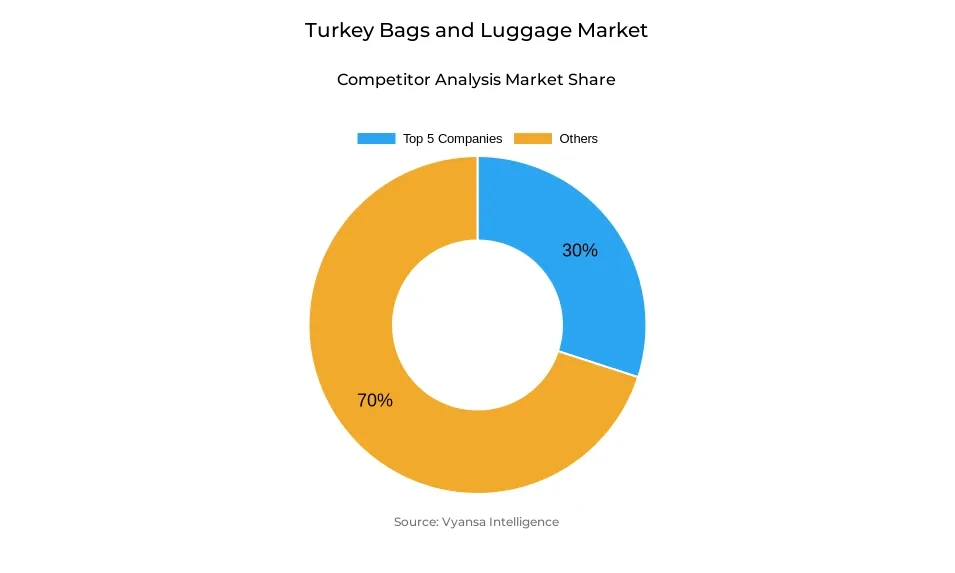
- More than 20 companies are actively engaged in producing bags and luggage in Turkey.
- Top 5 companies acquired around 30% of the market share.
- Matras Deri Mamülleri San ve Tic AS, Derimod Konfeksiyon Ayakkabi Deri San ve Tic AS, Eren Holding AS, Desa Deri San ve Tic AS, LC Waikiki Magazacilik Hizmetleri Tic AS etc., are few of the top companies.
- Sales Channel
- Retail offline grabbed 80% of the market.
Turkey Bags and Luggage Market Outlook
The Turkey bags and luggage market is entering a phase of positive development, supported by the combined expansion of physical retail and digital innovation. The market remains resilient as both local and international players invest in flagship stores alongside advanced retail online capabilities. Accordingly, the market is projected to reach USD 485 million in 2025 and USD 595 million by 2032, registering a CAGR of approximately 2.96% during 2026-32.
end user behaviour is shifting toward value-based and environmentally conscious purchasing, particularly among younger generations. Demand for sustainable products is rising, including luggage made from 100% recycled plastics and bags produced from recycled ocean waste or ethically sourced leather. The expansion of second-hand luxury platforms such as Beymen Reborn further highlights growing interest in quality and circular consumption, allowing end users to access premium designs despite budget constraints.
Operational strategies are also adapting to macroeconomic pressures such as inflation. To reduce exposure to global shocks and rising shipping costs, manufacturers are increasingly sourcing materials locally and developing regional supply chains. This trend coincides with the growth of outlet shopping malls, which appeal strongly to value-seeking end users. At the same time, brands are increasingly integrating social values, with greater emphasis on gender equality and women’s leadership.
Looking ahead, the market will increasingly be shaped by Generation Z and Alpha end users, who prioritise transparency and ethical production. The adoption of artificial intelligence in design and manufacturing is expected to enhance creativity and efficiency. With bags holding a 75% market share and retail offline accounting for 80%, Turkey presents a dynamic market where traditional retail and digital channels continue to coexist effectively.
Turkey Bags and Luggage Market Growth DriverDigital Retail Expansion Improves Access
Retailers continue to improve online and in-store experiences, making it easier for end users to discover and purchase bags and luggage. This is evident among players such as Derimod, which has invested in strong online infrastructure and significantly remodelled physical stores to expand product lines and improve shopping comfort. According to the Turkish Statistical Institute, 51.7% of people bought or ordered goods or services for private use in the 12 months prior to 2024, up from 49.5% in 2023.
As more end users become comfortable with online shopping, brands can reach shoppers beyond major high streets, deploy targeted promotions, and refresh collections more rapidly. Online platforms also encourage comparison of styles, features, and prices before visiting physical stores, increasing the importance of consistent pricing, clear product information, and reliable delivery and returns across both online and retail offline channels.
Turkey Bags and Luggage Market ChallengeInflation Keeps Buyers Value-Oriented
High inflation continues to strain discretionary spending, making end users more hesitant to purchase new bags and luggage, particularly at higher price points. According to TURKSTAT, the end user Price Index rose 44.38% year on year in December 2024, underscoring the severity of cost-of-living pressures. Elevated shipping and raw material costs further force brands to reassess pricing and sourcing strategies.
As budgets tighten, a growing number of younger end users are turning to second-hand luxury bags to access premium materials and craftsmanship at lower prices. Resale initiatives such as Beymen Reborn are increasing the visibility and convenience of pre-owned luxury, intensifying competition with new luxury products. As a result, brands are increasingly required to justify pricing through durability, after-sales service, and authenticity, while persistent discounting continues to erode profit margins across the broader market.
Unlock Market Intelligence
Explore the market potential with our data-driven report
Turkey Bags and Luggage Market TrendRecycled Materials Gain Visibility in Product Design
Eco-friendly positioning has intensified within the bags and luggage market, with brands highlighting recycled plastics and reduced-waste manufacturing. International players increasingly promote suitcases made from recycled PET and other recycled plastics, while local brands emphasise certified leather sourcing and reuse of surplus materials to support zero-waste strategies. As a result, recycled content has become a strong purchase signal across both premium and affordable product lines.
This shift aligns with Turkey’s broader waste recovery progress. According to TURKSTAT, 133.2 million tonnes of waste were treated in waste disposal and recovery facilities in 2022, of which 51.7 million tonnes were recovered. Rising recovery volumes improve access to recycled feedstock, enabling manufacturers to scale recycled fabrics and components and making sustainability claims more prominent in product descriptions and marketing, particularly across retail online platforms.
Turkey Bags and Luggage Market OpportunityCSR and Gender Equality Strengthen Brand Differentiation
Corporate social responsibility is emerging as an important differentiator in Turkey’s bags and luggage industry, particularly in relation to gender equality and women’s empowerment. Companies such as Derimod and other leather-goods groups highlight women’s representation in management and operate programmes supporting girls’ education and women entrepreneurs, strengthening brand associations with social contribution.
This positioning aligns with broader labour-market dynamics. TURKSTAT estimates women’s labour-force participation at 36.8% in 2024, reflecting a growing and more visible female workforce. As more women enter paid employment, purpose-led brands that demonstrate transparency and social responsibility are likely to strengthen affinity with value-conscious end users and stand out in an increasingly saturated retail landscape.
Unlock Market Intelligence
Explore the market potential with our data-driven report
Turkey Bags and Luggage Market Segmentation Analysis
By Category
- Bags
- Cross Body Bags
- Bags and Backpacks
- Business Bags
- Duffle Bags
- Clutches
- Others
- Luggage
- Soft Luggage
- Hard Luggage
- Wheeled Luggage
- Non-Wheeled Luggage
The segment with highest market share under category is bags, holding a 75% market share. This dominance reflects rising demand for high-quality materials and distinctive designs among fashion-conscious end users. The growing availability of eco-conscious options, including recycled nylon and ethically sourced leather, has further reinforced the segment’s leadership, as brands such as Manu Atelier and Prada align collections with evolving environmental values.
The category is also supported by the expanding second-hand luxury market, which attracts younger end users seeking premium quality at more accessible prices. While traditional bag formats remain essential, the emphasis on zero-waste manufacturing and the reintroduction of iconic designs using recycled materials continues to refresh the segment. As younger end users prioritise value and transparency, the bags segment is expected to retain its leading position through ongoing innovation and cultural relevance.
By Sales Channel
- Retail Offline
- Retail Online
Retail offline remains the dominant sales channel in Turkey, accounting for 80% of total market sales. Despite rapid growth in digital shopping, physical stores continue to play a central role by offering tactile and immersive shopping experiences. Leading retailers such as Derimod are expanding store sizes to accommodate broader assortments, creating multisensory environments that online platforms cannot fully replicate.
Although retail online is becoming increasingly central to retail strategies, physical outlets—particularly outlet malls—are essential for engaging price-sensitive end users during periods of high inflation. These locations allow customers to explore premium collections and second-hand luxury offerings in person. By combining renovated physical stores with improved digital capabilities, the market ensures that offline retail remains the dominant distribution channel through 2032.
List of Companies Covered in Turkey Bags and Luggage Market
The companies listed below are highly influential in the Turkey bags and luggage market, with a significant market share and a strong impact on industry developments.
- Matras Deri Mamülleri San ve Tic AS
- Derimod Konfeksiyon Ayakkabi Deri San ve Tic AS
- Eren Holding AS
- Desa Deri San ve Tic AS
- LC Waikiki Magazacilik Hizmetleri Tic AS
- Demsa Ic ve Dis Ticaret AS
- Ertek AS
- LVMH Moët Hennessy Louis Vuitton Turkiye
- Prada Bosphorus Deri Mamüller Ltd Sti
- Za Giyim Ithalat Ihracat ve Ticaret Ltd Sti
Competitive Landscape
Turkey bags and luggage market remains shaped by a mix of strong domestic players, premium international brands, and the rising influence of resale and sustainability. Derimod stands out among local players, leveraging an expanding physical store network alongside a rapidly growing retail e-commerce presence, which already accounts for a meaningful share of turnover and strengthens its omnichannel competitiveness. In the luxury segment, brands face mounting pressure from the expanding second-hand market, led by platforms such as Beymen Reborn, which resonate strongly with younger, value- and sustainability-oriented shoppers. Meanwhile, international luggage specialists like Samsonite and Delsey reinforce their positions through eco-conscious product innovation, while niche local brands such as Manu Atelier differentiate through ethical sourcing and zero-waste manufacturing practices.
Frequently Asked Questions
Related Report
- Market Segmentation
- Research Scope
- Research Methodology
- Definitions and Assumptions
- Executive Summary
- Turkey Bags and Luggage Market Policies, Regulations, and Standards
- Turkey Bags and Luggage Market Dynamics
- Growth Factors
- Challenges
- Trends
- Opportunities
- Turkey Bags and Luggage Market Statistics, 2022-2032F
- Market Size & Growth Outlook
- By Revenues in USD Million
- By Units Sold in Thousand Units
- Market Segmentation & Growth Outlook
- By Category
- Bags- Market Insights and Forecast 2022-2032, USD Million
- Cross Body Bags- Market Insights and Forecast 2022-2032, USD Million
- Bags and Backpacks- Market Insights and Forecast 2022-2032, USD Million
- Business Bags- Market Insights and Forecast 2022-2032, USD Million
- Duffle Bags- Market Insights and Forecast 2022-2032, USD Million
- Clutches- Market Insights and Forecast 2022-2032, USD Million
- Others- Market Insights and Forecast 2022-2032, USD Million
- Luggage- Market Insights and Forecast 2022-2032, USD Million
- Soft Luggage- Market Insights and Forecast 2022-2032, USD Million
- Hard Luggage- Market Insights and Forecast 2022-2032, USD Million
- Wheeled Luggage- Market Insights and Forecast 2022-2032, USD Million
- Non-Wheeled Luggage- Market Insights and Forecast 2022-2032, USD Million
- Bags- Market Insights and Forecast 2022-2032, USD Million
- By Sales Channel
- Retail Offline- Market Insights and Forecast 2022-2032, USD Million
- Retail Online- Market Insights and Forecast 2022-2032, USD Million
- By Material Type
- Soft Case- Market Insights and Forecast 2022-2032, USD Million
- Nylon- Market Insights and Forecast 2022-2032, USD Million
- Polyester- Market Insights and Forecast 2022-2032, USD Million
- Ballistic Nylon- Market Insights and Forecast 2022-2032, USD Million
- Hard Case- Market Insights and Forecast 2022-2032, USD Million
- Polycarbonate- Market Insights and Forecast 2022-2032, USD Million
- ABS (Acrylonitrile Butadiene Styrene)- Market Insights and Forecast 2022-2032, USD Million
- Polypropylene- Market Insights and Forecast 2022-2032, USD Million
- Soft Case- Market Insights and Forecast 2022-2032, USD Million
- By Price Category
- Luxury- Market Insights and Forecast 2022-2032, USD Million
- Mass/Economy- Market Insights and Forecast 2022-2032, USD Million
- Premium- Market Insights and Forecast 2022-2032, USD Million
- By Application
- Travel- Market Insights and Forecast 2022-2032, USD Million
- Business- Market Insights and Forecast 2022-2032, USD Million
- By Competitors
- Competition Characteristics
- Market Share & Analysis
- By Category
- Market Size & Growth Outlook
- Turkey Bags Market Statistics, 2022-2032
- Market Size & Growth Outlook
- By Revenues in USD Million
- By Units Sold in Thousand Units
- Market Segmentation & Growth Outlook
- By Category- Market Insights and Forecast 2022-2032, USD Million
- By Sales Channel- Market Insights and Forecast 2022-2032, USD Million
- By Material Type- Market Insights and Forecast 2022-2032, USD Million
- By Price Category- Market Insights and Forecast 2022-2032, USD Million
- By Application- Market Insights and Forecast 2022-2032, USD Million
- Market Size & Growth Outlook
- Turkey Luggage Market Statistics, 2022-2032
- Market Size & Growth Outlook
- By Revenues in USD Million
- By Units Sold in Thousand Units
- Market Segmentation & Growth Outlook
- By Category- Market Insights and Forecast 2022-2032, USD Million
- By Sales Channel- Market Insights and Forecast 2022-2032, USD Million
- By Material Type- Market Insights and Forecast 2022-2032, USD Million
- By Price Category- Market Insights and Forecast 2022-2032, USD Million
- By Application- Market Insights and Forecast 2022-2032, USD Million
- Market Size & Growth Outlook
- Competitive Outlook
- Company Profiles
- Desa Deri San ve Tic AS
- Business Description
- Product Portfolio
- Collaborations & Alliances
- Recent Developments
- Financial Details
- Others
- LC Waikiki Magazacilik Hizmetleri Tic AS
- Business Description
- Product Portfolio
- Collaborations & Alliances
- Recent Developments
- Financial Details
- Others
- Demsa Ic ve Dis Ticaret AS
- Business Description
- Product Portfolio
- Collaborations & Alliances
- Recent Developments
- Financial Details
- Others
- Ertek AS
- Business Description
- Product Portfolio
- Collaborations & Alliances
- Recent Developments
- Financial Details
- Others
- LVMH Moët Hennessy Louis Vuitton Türkiye
- Business Description
- Product Portfolio
- Collaborations & Alliances
- Recent Developments
- Financial Details
- Others
- Matras Deri Mamülleri San ve Tic AS
- Business Description
- Product Portfolio
- Collaborations & Alliances
- Recent Developments
- Financial Details
- Others
- Derimod Konfeksiyon Ayakkabi Deri San ve Tic AS
- Business Description
- Product Portfolio
- Collaborations & Alliances
- Recent Developments
- Financial Details
- Others
- Eren Holding AS
- Business Description
- Product Portfolio
- Collaborations & Alliances
- Recent Developments
- Financial Details
- Others
- Prada Bosphorus Deri Mamüller Ltd Sti
- Business Description
- Product Portfolio
- Collaborations & Alliances
- Recent Developments
- Financial Details
- Others
- Za Giyim Ithalat Ihracat ve Ticaret Ltd Sti
- Business Description
- Product Portfolio
- Collaborations & Alliances
- Recent Developments
- Financial Details
- Others
- Desa Deri San ve Tic AS
- Company Profiles
- Disclaimer
| Segment | Sub-Segment |
|---|---|
| By Category |
|
| By Sales Channel |
|
| By Material Type |
|
| By Price Category |
|
| By Application |
|
Research Methodology
This study followed a structured approach comprising four key phases to assess the size and scope of the electro-oxidation market. The process began with thorough secondary research to collect data on the target market, related markets, and broader industry context. These findings, along with preliminary assumptions and estimates, were then validated through extensive primary research involving industry experts from across the value chain. To calculate the overall market size, both top-down and bottom-up methodologies were employed. Finally, market segmentation and data triangulation techniques were applied to refine and validate segment-level estimations.
Secondary Research
The secondary research phase involved gathering data from a wide range of credible and published sources. This step helped in identifying industry trends, defining market segmentation, and understanding the market landscape and value chain.
Sources consulted during this phase included:
- Company annual reports, investor presentations, and press releases
- Industry white papers and certified publications
- Trade directories and market-recognized databases
- Articles from authoritative authors and reputable journals
- Gold and silver standard websites
Secondary research was critical in mapping out the industry's value chain and monetary flow, identifying key market segments, understanding regional variations, and tracking significant industry developments.
Other key sources:
- Financial disclosures
- Industry associations and trade bodies
- News outlets and business magazines
- Academic journals and research studies
- Paid industry databases
Primary Research
To validate secondary data and gain deeper market insights, primary research was conducted with key stakeholders across both the supply and demand sides of the market.
On the demand side, participants included decision-makers and influencers from end-user industries—such as CIOs, CTOs, and CSOs—who provided first-hand perspectives on market needs, product usage, and future expectations.
On the supply side, interviews were conducted with manufacturers, industry associations, and institutional participants to gather insights into current offerings, product pipelines, and market challenges.
Primary interviews provided critical inputs such as:
- Market size and revenue data
- Product and service breakdowns
- Market forecasts
- Regional and application-specific trends
Stakeholders consulted included:
- Leading OEM and solution providers
- Channel and distribution partners
- End users across various applications
- Independent consultants and industry specialists
Market Size Estimation and Data Triangulation
- Identifying Key Market Participants (Secondary Research)
- Goal: To identify the major players or companies in the target market. This typically involves using publicly available data sources such as industry reports, market research publications, and financial statements of companies.
- Tools: Reports from firms like Gartner, Forrester, Euromonitor, Statista, IBISWorld, and others. Public financial statements, news articles, and press releases from top market players.
- Extracting Earnings of Key Market Participants
- Goal: To estimate the earnings generated from the product or service being analyzed. This step helps in understanding the revenue potential of each market player in a specific geography.
- Methods: Earnings data can be gathered from:
- Publicly available financial reports (for listed companies).
- Interviews and primary data sources from professionals, such as Directors, VPs, SVPs, etc. This is especially useful for understanding more nuanced, internal data that isn't publicly disclosed.
- Annual reports and investor presentations of key players.
- Data Collation and Development of a Relevant Data Model
- Goal: To collate inputs from both primary and secondary sources into a structured, data-driven model for market estimation. This model will incorporate key market KPIs and any independent variables relevant to the market.
- Key KPIs: These could include:
- Market size, growth rate, and demand drivers.
- Industry-specific metrics like market share, average revenue per customer (ARPC), or average deal size.
- External variables, such as economic growth rates, inflation rates, or commodity prices, that could affect the market.
- Data Modeling: Based on this data, the market forecasts are developed for the next 5 years. A combination of trend analysis, scenario modeling, and statistical regression might be used to generate projections.
- Scenario Analysis
- Goal: To test different assumptions and validate how sensitive the market is to changes in key variables (e.g., market demand, regulatory changes, technological disruptions).
- Types of Scenarios:
- Base Case: Based on current assumptions and historical data.
- Best-Case Scenario: Assuming favorable market conditions, regulatory environments, and technological advancements.
- Worst-Case Scenario: Accounting for adverse factors, such as economic downturns, stricter regulations, or unexpected disruptions.












