Japan NRT Smoking Cessation Aids Market Report: Trends, Growth and Forecast (2026-2032)
By Category (NRT Gum, NRT Inhalators, NRT Lozenges, NRT Patches, Other NRT Products), By Gender (Male, Female), By Sales Channel (Retail Online (Online Pharmacies, Brand-Owned Websites, E-commerce Marketplaces), Retail Offline (Hospital, Pharmacies, Drug Stores)), By End User (Individual / Consumer Self-Use, Healthcare-Professional-Supervised (Clinics, De-addiction Centers, Smoking Cessation Centers)) ... Read more

|
Major Players
|
Japan NRT Smoking Cessation Aids Market Statistics and Insights, 2026
- Market Size Statistics
- Nrt smoking cessation aids market size in Japan was valued at USD 45 million in 2025 and is estimated at USD 46 million in 2026.
- The market size is expected to grow to USD 50 million by 2032.
- Market to register a CAGR of around 1.52% during 2026-32.
- Category Shares
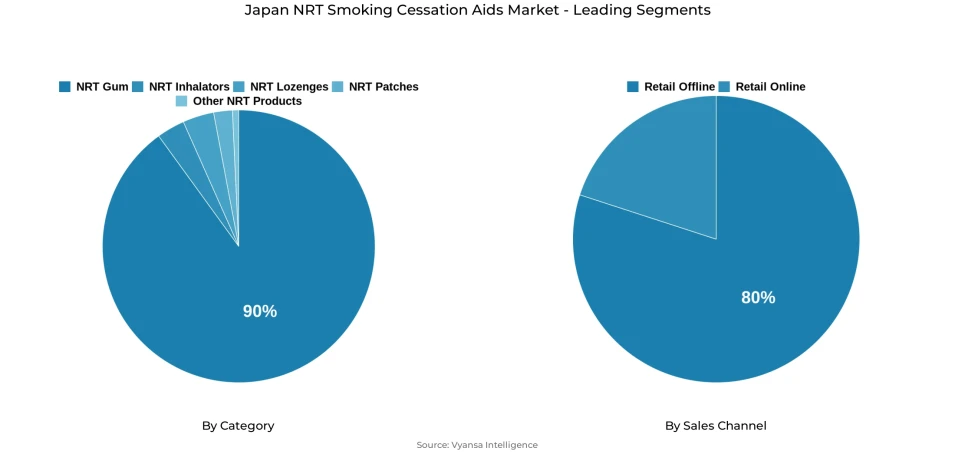
- Nrt gum grabbed market share of 90%.
- Competition
- More than 5 companies are actively engaged in producing nrt smoking cessation aids in Japan.
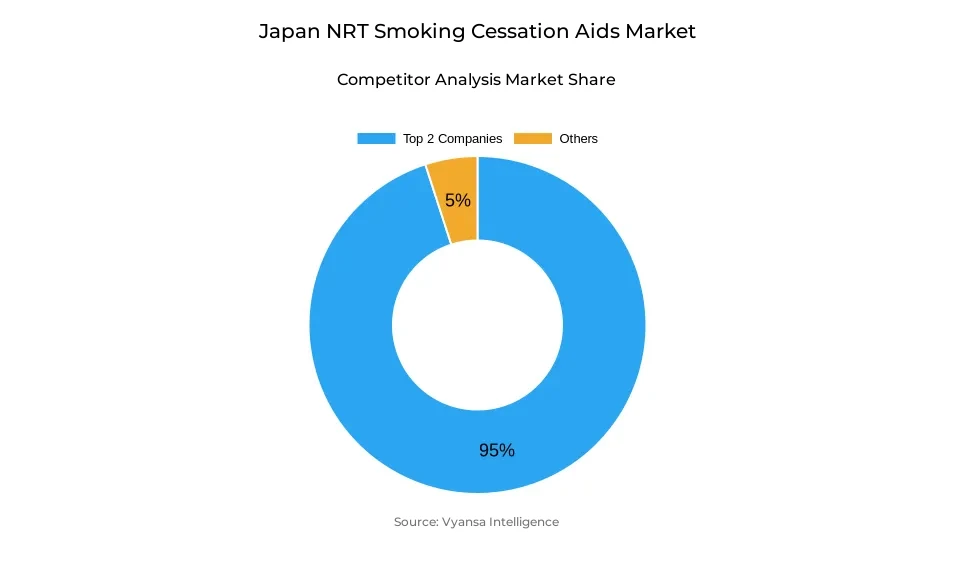
- Top 2 companies acquired around 95% of the market share.
- Alinamin Pharmaceutical Co Ltd, GlaxoSmithKline Consumer Healthcare Japan KK etc., are few of the top companies.
- Sales Channel
- Retail offline grabbed 80% of the market.
Japan NRT Smoking Cessation Aids Market Outlook
The Japan NRT smoking cessation aids market size was valued at USD 45 million in 2025 and is projected to grow from USD 46 million in 2026 to USD 50 million by 2032, exhibiting a CAGR of around 1.52% during the forecast period. Growth remains gradual as stricter tobacco-control policies and public awareness campaigns continue to encourage smokers to consider quitting while maintaining steady demand for cessation support products.
Policy pressure plays an important role in shaping demand. Tighter smoking restrictions, public anti-smoking campaigns, and rising tobacco prices make daily smoking less convenient and increase the visibility of NRT smoking cessation aids such as gum and patches. In 2025, Osaka Prefecture fully enforced its passive-smoking ordinance requiring restaurants with seating areas above 30 square metres to be principally smoke-free indoors. The Ministry of Health, Labour and Welfare also organizes No Smoking Week from 31 May to 6 June 2025, while the National Health and Nutrition Survey reports that 14.8% of adults remain habitual smokers, maintaining a base for cessation demand.
However, the category faces structural challenges as the smoking population gradually declines and more consumers shift toward alternative nicotine products such as heated tobacco. The National Health and Nutrition Survey, released in December 2025, confirms that habitual smoking has fallen to 14.8%, the lowest level in the past 12 years. Within product segmentation, NRT gum holds around 90% share, reflecting its strong familiarity, portability, and ease of use among consumers who prefer flexible craving management within NRT smoking cessation aids.
Distribution patterns also influence purchasing behaviour. Retail offline accounts for about 80% of total sales, highlighting the continued importance of pharmacies and drugstores where consumers often first explore cessation products. At the same time, online purchasing is expanding as consumers seek convenience and easier reordering. The Statistics Bureau reports that in 2025, average monthly household spending on online shopping reached JPY 26,928, up 8.0% from 2024, and 59.5% of households with two or more people used online shopping, supporting digital sales of NRT smoking cessation aids.
Japan NRT Smoking Cessation Aids Market Growth DriverSmoke-Free Rules Push More Smokers to Trial Quit Aids
One of the key factors that support the NRT smoking cessation support of Japan is the heightened policy pressure that makes smoking more and more inconvenient, thus forcing more smokers to use cessation aids. This effect proves that strict smoking bans, anti-smoking campaigns among the population, and high prices of tobacco products all contribute to the increased popularity of gums and patches as full-fledged cessation tools. This effect is especially noticeable when smoking becomes harder to maintain in the context of daily social life.
Official action in 2025 supports this shift. Osaka Prefecture fully enforces its passive-smoking ordinance on 1 April 2025, making restaurants with seating areas above 30 square metres “principally smoke-free indoors.” The Ministry of Health, Labour and Welfare also runs No Smoking Week from 31 May to 6 June 2025. At the same time, Japan’s 2024 National Health and Nutrition Survey reports that 14.8% of adults are habitual smokers, leaving a meaningful base for cessation demand.
Japan NRT Smoking Cessation Aids Market ChallengeA Shrinking Smoker Base Keeps Structural Pressure High
A major problem facing Japan’s NRT smoking cessation aids market is the shrinking base of the user population. It highlights the fact that the trend of smoking is declining, which in turn affects the potential base of the population seeking alternatives such as gum, patches, and lozenges. At the same time, the trend of people opting for alternatives such as heated tobacco products, which they find more trendy, is also affecting the demand for traditional NRT.
Official statistics show that this problem facing Japan’s NRT smoking cessation aids market is not a short-term but a long-term problem, as indicated by the statistics of Japan’s National Health and Nutrition Survey 2024, released in December 2025, showing that the percentage of habitual smokers decreases to 14.8%. Japan’s Ministry of Finance, in its materials on tobacco taxes in 2025, states, cigarette sales volume continues to decline, but the percentage of sales of manufactured tobacco products other than cigarettes increases.
Unlock Market Intelligence
Explore the market potential with our data-driven report
Japan NRT Smoking Cessation Aids Market TrendOnline Refill Buying Is Reshaping Purchase Behaviour
A clear trend in Japan’s NRT smoking cessation aids market is the stronger move toward online purchasing. It shows that e-commerce keeps taking share because consumers want lower prices, easier replenishment, and simple repeat ordering of products they already know. Pharmacies still matter for first-time guidance and trust, but the buying journey is increasingly shifting toward convenient online refill behaviour.
Japan’s broader retail patterns support this trend. The Statistics Bureau reports that, for households with two or more people, average monthly spending on online shopping reaches JPY 26,928 in 2025, up 8.0% from 2024. In December 2025, 59.5% of such households use online shopping. These figures help explain why NRT products, especially repeat-purchase items like gum and patches, are increasingly well suited to digital channels.
Japan NRT Smoking Cessation Aids Market OpportunityTax-Linked Quit Windows Create the Clearest Growth Opening
A key opportunity for Japan’s NRT smoking cessation aids market lies in capturing short, policy-driven windows when smokers are most motivated to quit. It points to tax hikes, no smoking week, and tighter public smoking rules as moments that can lift trial demand even in a structurally declining market. For brands, the opportunity is not broad market expansion, but sharper timing using these trigger periods to convert hesitation into action.
Official policy already creates such windows. Japan’s Ministry of Finance states that heated-tobacco taxation will be adjusted in April 2026 and October 2026, and the national tobacco tax rate will rise by 0.5 yen per stick in April 2027, April 2028, and April 2029. Meanwhile, no smoking week continues every year from 31 May to 6 June. These recurring triggers create clear moments for targeted campaigns and guided cessation programmes.
Unlock Market Intelligence
Explore the market potential with our data-driven report
Japan NRT Smoking Cessation Aids Market Segmentation Analysis
By Category
- NRT Gum
- NRT Inhalators
- NRT Lozenges
- NRT Patches
- Other NRT Products
The segment has the highest share around the category under NRT smoking cessation aids, with NRT gum grabbing 90% share. This dominance fits the analysis, which shows that gum remains the most established and widely used OTC format in Japan. It is portable, familiar, and easy to trial, which makes it a practical choice for smokers who want a flexible product they can use during cravings without changing their routine too much.
Its leadership is also reinforced by the way the category behaves. The analysis shows that Nicorette gum remains central to the market because flavour choice, pack-size variation, and user familiarity help keep it relevant even while the overall category contracts. Compared with patches, which are more rigid in use, gum gives smokers more immediate control, which helps explain why it continues to anchor the segment.
By Sales Channel
- Retail Online
- Online Pharmacies
- Brand-Owned Websites
- E-commerce Marketplaces
- Retail Offline
- Hospital
- Pharmacies
- Drug Stores
The segment has the highest share around the sales channel, where retail offline grabs 80% of the market. This reflects the continued importance of physical pharmacies and drugstores as places where smokers first encounter cessation products, compare options, and seek reassurance. In a category tied closely to trust and routine healthcare shopping, store-based access still plays a central role even when the broader market is under pressure.
At the same time, this reveals that digital channels combine advertising and retail are an important factor, and that impact has grown since the study produced the latest figures. With the offline channel still being the largest, but not as dominant, the digital channel is becoming increasingly catalytic to the way a consumer remains a consumer of the product. The offline channel serves to build consumer awareness and provide consumer access, while digital continues to enable consumers with the tools to replenish, compare prices and repurchase. Therefore, you can see that both channels are important in building an overall mix of channels, with offline being more influential, however, online channels are increasingly impacting in how a consumer continues to participate in the respective channel.
List of Companies Covered in Japan NRT Smoking Cessation Aids Market
The companies listed below are highly influential in the Japan nrt smoking cessation aids market, with a significant market share and a strong impact on industry developments.
- Alinamin Pharmaceutical Co Ltd
- GlaxoSmithKline Consumer Healthcare Japan KK
Competitive Landscape
In 2025, the competitive landscape of NRT smoking cessation aids in Japan remains concentrated, led by Alinamin Pharmaceutical Co Ltd with an 80.6% retail value share through its Nicorette gum, followed by GlaxoSmithKline Consumer Healthcare Japan KK with a 19.4% share mainly through Nicotinell patches. These two brands dominate the category by leveraging strong brand credibility, pharmacy and e-commerce distribution, and features such as flavour variety in nicotine gum and the convenience of once-daily patch application. Despite their strong presence, the overall market continues to contract as the smoker base declines and many consumers shift towards heated tobacco and vaping alternatives. However, regulatory measures such as stricter passive smoking rules, tobacco price increases, and public health campaigns occasionally stimulate short-term demand for cessation aids, allowing leading brands to maintain relevance even within a structurally declining market.
Frequently Asked Questions
Related Report
- Market Segmentation
- Research Scope
- Research Methodology
- Definitions and Assumptions
- Executive Summary
- Japan NRT Smoking Cessation Aids Market Policies, Regulations, and Standards
- Japan NRT Smoking Cessation Aids Market Dynamics
- Growth Factors
- Challenges
- Trends
- Opportunities
- Japan NRT Smoking Cessation Aids Market Statistics, 2022-2032F
- Market Size & Growth Outlook
- By Revenues in USD Million
- Market Segmentation & Growth Outlook
- By Category
- NRT Gum- Market Insights and Forecast 2022-2032, USD Million
- NRT Inhalators- Market Insights and Forecast 2022-2032, USD Million
- NRT Lozenges- Market Insights and Forecast 2022-2032, USD Million
- NRT Patches- Market Insights and Forecast 2022-2032, USD Million
- Other NRT Products- Market Insights and Forecast 2022-2032, USD Million
- By Gender
- Male- Market Insights and Forecast 2022-2032, USD Million
- Female- Market Insights and Forecast 2022-2032, USD Million
- By Sales Channel
- Retail Online- Market Insights and Forecast 2022-2032, USD Million
- Online Pharmacies- Market Insights and Forecast 2022-2032, USD Million
- Brand-Owned Websites- Market Insights and Forecast 2022-2032, USD Million
- E-commerce Marketplaces- Market Insights and Forecast 2022-2032, USD Million
- Retail Offline- Market Insights and Forecast 2022-2032, USD Million
- Hospital- Market Insights and Forecast 2022-2032, USD Million
- Pharmacies- Market Insights and Forecast 2022-2032, USD Million
- Drug Stores- Market Insights and Forecast 2022-2032, USD Million
- Retail Online- Market Insights and Forecast 2022-2032, USD Million
- By End User
- Individual / Consumer Self-Use- Market Insights and Forecast 2022-2032, USD Million
- Healthcare-Professional-Supervised- Market Insights and Forecast 2022-2032, USD Million
- Clinics- Market Insights and Forecast 2022-2032, USD Million
- De-addiction Centers - Market Insights and Forecast 2022-2032, USD Million
- Smoking Cessation Centers- Market Insights and Forecast 2022-2032, USD Million
- By Competitors
- Competition Characteristics
- Market Share & Analysis
- By Category
- Market Size & Growth Outlook
- Japan NRT Gum Market Statistics, 2022-2032
- Market Size & Growth Outlook
- By Revenues in USD Million
- Market Segmentation & Growth Outlook
- By Gender- Market Insights and Forecast 2022-2032, USD Million
- By Sales Channel- Market Insights and Forecast 2022-2032, USD Million
- By End User- Market Insights and Forecast 2022-2032, USD Million
- Market Size & Growth Outlook
- Japan NRT Inhalators Market Statistics, 2022-2032
- Market Size & Growth Outlook
- By Revenues in USD Million
- Market Segmentation & Growth Outlook
- By Gender- Market Insights and Forecast 2022-2032, USD Million
- By Sales Channel- Market Insights and Forecast 2022-2032, USD Million
- By End User- Market Insights and Forecast 2022-2032, USD Million
- Market Size & Growth Outlook
- Japan NRT Lozenges Market Statistics, 2022-2032
- Market Size & Growth Outlook
- By Revenues in USD Million
- Market Segmentation & Growth Outlook
- By Gender- Market Insights and Forecast 2022-2032, USD Million
- By Sales Channel- Market Insights and Forecast 2022-2032, USD Million
- By End User- Market Insights and Forecast 2022-2032, USD Million
- Market Size & Growth Outlook
- Japan NRT Patches Market Statistics, 2022-2032
- Market Size & Growth Outlook
- By Revenues in USD Million
- Market Segmentation & Growth Outlook
- By Gender- Market Insights and Forecast 2022-2032, USD Million
- By Sales Channel- Market Insights and Forecast 2022-2032, USD Million
- By End User- Market Insights and Forecast 2022-2032, USD Million
- Market Size & Growth Outlook
- Japan Other NRT Products Market Statistics, 2022-2032
- Market Size & Growth Outlook
- By Revenues in USD Million
- Market Segmentation & Growth Outlook
- By Gender- Market Insights and Forecast 2022-2032, USD Million
- By Sales Channel- Market Insights and Forecast 2022-2032, USD Million
- By End User- Market Insights and Forecast 2022-2032, USD Million
- Market Size & Growth Outlook
- Competitive Outlook
- Company Profiles
- Alinamin Pharmaceutical Co Ltd
- Business Description
- Product Portfolio
- Collaborations & Alliances
- Recent Developments
- Financial Details
- Others
- GlaxoSmithKline Consumer Healthcare Japan KK
- Business Description
- Product Portfolio
- Collaborations & Alliances
- Recent Developments
- Financial Details
- Others
- Taisho Pharmaceutical Co Ltd
- Business Description
- Product Portfolio
- Collaborations & Alliances
- Recent Developments
- Financial Details
- Others
- Takeda Pharmaceutical Co Ltd
- Business Description
- Product Portfolio
- Collaborations & Alliances
- Recent Developments
- Financial Details
- Others
- Takeda Consumer Healthcare Ltd
- Business Description
- Product Portfolio
- Collaborations & Alliances
- Recent Developments
- Financial Details
- Others
- Others
- Business Description
- Product Portfolio
- Collaborations & Alliances
- Recent Developments
- Financial Details
- Others
- Alinamin Pharmaceutical Co Ltd
- Company Profiles
- Disclaimer
| Segment | Sub-Segment |
|---|---|
| By Category |
|
| By Gender |
|
| By Sales Channel |
|
| By End User |
|
Research Methodology
This study followed a structured approach comprising four key phases to assess the size and scope of the electro-oxidation market. The process began with thorough secondary research to collect data on the target market, related markets, and broader industry context. These findings, along with preliminary assumptions and estimates, were then validated through extensive primary research involving industry experts from across the value chain. To calculate the overall market size, both top-down and bottom-up methodologies were employed. Finally, market segmentation and data triangulation techniques were applied to refine and validate segment-level estimations.
Secondary Research
The secondary research phase involved gathering data from a wide range of credible and published sources. This step helped in identifying industry trends, defining market segmentation, and understanding the market landscape and value chain.
Sources consulted during this phase included:
- Company annual reports, investor presentations, and press releases
- Industry white papers and certified publications
- Trade directories and market-recognized databases
- Articles from authoritative authors and reputable journals
- Gold and silver standard websites
Secondary research was critical in mapping out the industry's value chain and monetary flow, identifying key market segments, understanding regional variations, and tracking significant industry developments.
Other key sources:
- Financial disclosures
- Industry associations and trade bodies
- News outlets and business magazines
- Academic journals and research studies
- Paid industry databases
Primary Research
To validate secondary data and gain deeper market insights, primary research was conducted with key stakeholders across both the supply and demand sides of the market.
On the demand side, participants included decision-makers and influencers from end-user industries—such as CIOs, CTOs, and CSOs—who provided first-hand perspectives on market needs, product usage, and future expectations.
On the supply side, interviews were conducted with manufacturers, industry associations, and institutional participants to gather insights into current offerings, product pipelines, and market challenges.
Primary interviews provided critical inputs such as:
- Market size and revenue data
- Product and service breakdowns
- Market forecasts
- Regional and application-specific trends
Stakeholders consulted included:
- Leading OEM and solution providers
- Channel and distribution partners
- End users across various applications
- Independent consultants and industry specialists
Market Size Estimation and Data Triangulation
- Identifying Key Market Participants (Secondary Research)
- Goal: To identify the major players or companies in the target market. This typically involves using publicly available data sources such as industry reports, market research publications, and financial statements of companies.
- Tools: Reports from firms like Gartner, Forrester, Euromonitor, Statista, IBISWorld, and others. Public financial statements, news articles, and press releases from top market players.
- Extracting Earnings of Key Market Participants
- Goal: To estimate the earnings generated from the product or service being analyzed. This step helps in understanding the revenue potential of each market player in a specific geography.
- Methods: Earnings data can be gathered from:
- Publicly available financial reports (for listed companies).
- Interviews and primary data sources from professionals, such as Directors, VPs, SVPs, etc. This is especially useful for understanding more nuanced, internal data that isn't publicly disclosed.
- Annual reports and investor presentations of key players.
- Data Collation and Development of a Relevant Data Model
- Goal: To collate inputs from both primary and secondary sources into a structured, data-driven model for market estimation. This model will incorporate key market KPIs and any independent variables relevant to the market.
- Key KPIs: These could include:
- Market size, growth rate, and demand drivers.
- Industry-specific metrics like market share, average revenue per customer (ARPC), or average deal size.
- External variables, such as economic growth rates, inflation rates, or commodity prices, that could affect the market.
- Data Modeling: Based on this data, the market forecasts are developed for the next 5 years. A combination of trend analysis, scenario modeling, and statistical regression might be used to generate projections.
- Scenario Analysis
- Goal: To test different assumptions and validate how sensitive the market is to changes in key variables (e.g., market demand, regulatory changes, technological disruptions).
- Types of Scenarios:
- Base Case: Based on current assumptions and historical data.
- Best-Case Scenario: Assuming favorable market conditions, regulatory environments, and technological advancements.
- Worst-Case Scenario: Accounting for adverse factors, such as economic downturns, stricter regulations, or unexpected disruptions.












