Canada Facial Cleanser Market Report: Trends, Growth and Forecast (2026-2032)
By Product Type (Gel Cleanser, Foam Cleanser, Cream Cleanser, Liquid Cleanser, Oil Cleanser, Balm Cleanser, Micellar Cleanser, Powder/Bar Cleanser), By Skin Type (Oily & Acne-Prone Skin, Dry Skin, Sensitive Skin, Combination Skin, Normal Skin), By Ingredient (Conventional, Natural/Organic, Sulfate-Free, Fragrance-Free, Medicated/Active-Based), By Consumer Group (Women, Men, Unisex, Teen), By Distribution Channel (Retail Offline (Supermarkets/Hypermarkets, Pharmacies/Drug Stores, Specialty Beauty Stores, Department Stores), Retail Online (E-commerce Platforms, Brand-Owned Websites (D2C), Online Beauty Retailers)), By Price Point (Mass, Premium, Luxury) ... Read more
|
Major Players
|
Canada Facial Cleanser Market Statistics and Insights, 2026
- Market Size Statistics
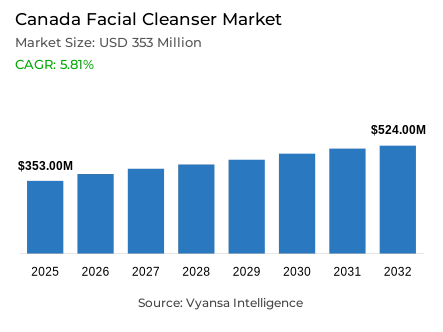
- Facial cleanser market size in Canada was valued at USD 353 million in 2025 and is estimated at USD 373 million in 2026.
- The market size is expected to grow to USD 524 million by 2032.
- Market to register a CAGR of around 5.81% during 2026-32.
- Product Type Shares
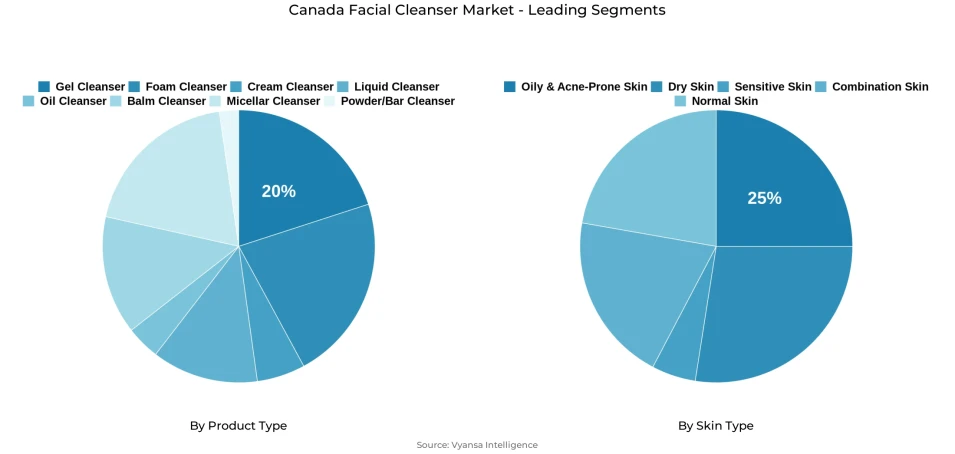
- Gel cleanser grabbed market share of 20%.
- Competition
- More than 10 companies are actively engaged in producing facial cleanser in Canada.
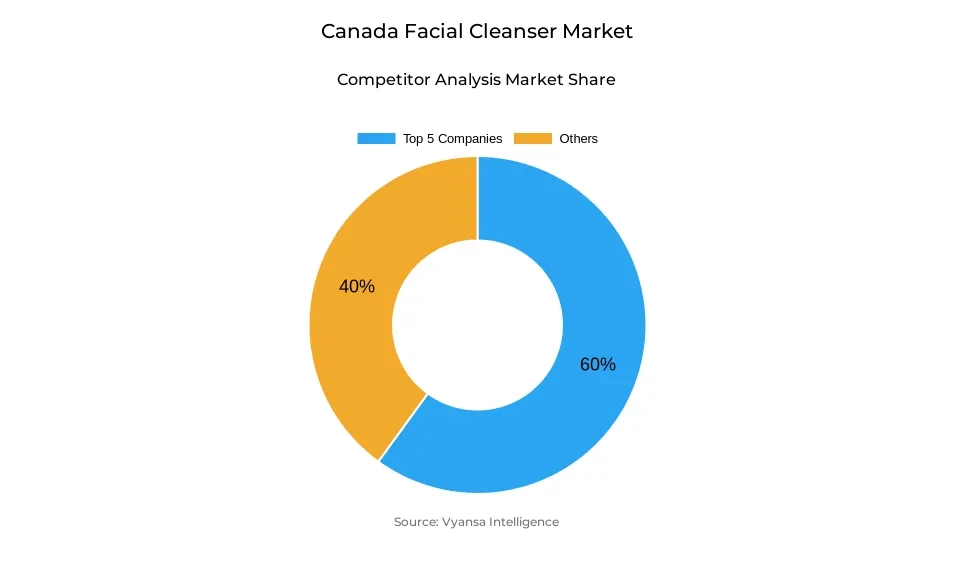
- Top 5 companies acquired around 60% of the market share.
- Groupe Marcelle , The Estée Lauder Companies , Beiersdorf , L’Oréal , Kenvue etc., are few of the top companies.
- Skin Type
- Oily & acne-prone skin grabbed 25% of the market.
Canada Facial Cleanser Market Outlook
The Canada facial cleanser market size was valued at USD 353 million in 2025 and is projected to grow from USD 373 million in 2026 to USD 524 million by 2032, exhibiting a CAGR of 5.81% during the forecast period. The category moves forward on the back of steady everyday demand, supported by a large adult consumer base and a growing senior population that continues to use regular skin-care products. Daily cleansing remains closely linked with hygiene, comfort, and basic skin maintenance, which keeps demand stable across age groups. This creates a solid foundation for category expansion through routine use rather than only occasional beauty-led purchases.
Growth also remains supported by changing consumer preferences and improving product visibility across retail channels. Within product type, gel cleanser holds 20% share, reflecting strong preference for lightweight, easy-rinse formats that suit regular daily use. In addition, facial cleanser demand benefits from online retail expansion, as consumers can compare ingredients, intended skin type, and product claims more easily through digital platforms. This strengthens repeat buying behavior and supports broader access across Canada. The category also gains from a large working-age and mature population base, which continues to sustain practical and replenishment-driven skincare demand.
At the same time, facial cleanser brands operate within a stricter regulatory environment that shapes the outlook of the category. Ingredient restrictions, product notification rules, and packaging-related compliance requirements are increasing development discipline across the industry. These measures can slow launches and raise reformulation needs, yet they also strengthen consumer confidence through clearer standards and stronger quality control. Moreover, the rising relevance of cruelty-free claims and packaging transparency is shaping how products are positioned, especially as policy-backed developments make such claims more visible and easier to assess in the personal care space.
From a skin-type perspective, oily & acne-prone skin accounts for 25% share, showing strong consumer focus on oil control, deep cleansing, and blemish-related benefits. This keeps targeted facial cleanser products commercially important, especially where buyers seek clear functional outcomes from routine skincare. Overall, the outlook remains supported by everyday use, strong performance of gel formats, rising digital access, and demand for concern-based products, while regulatory discipline and transparency trends continue to improve product credibility and reinforce category expansion over the forecast period.
Canada Facial Cleanser Market Growth Driver
Expanding Adult and Aging Consumer Base Supports Routine Cleansing Demand
Canada’s facial cleanser demand remains relevant because daily cleansing serves a large adult population with regular skin-care needs. The facial cleansing products market benefits from routine use among working-age consumers who prefer simple, repeat-purchase products, while older consumers increasingly look for gentle cleansing formats that support comfort, hydration, and mild skin maintenance. This broad demographic base keeps facial cleansers closely tied to everyday personal care rather than occasional beauty use alone.
Official data confirms that scale. The population aged 65 years and older rises to 8,108,467, up 3.4% year over year, and represents 19.5% of Canada’s population on July 1, 2025. A market serving a large adult base alongside a steadily growing senior cohort continues to benefit from everyday cleansing demand, especially for products positioned around mild formulas and regular use.
Canada Facial Cleanser Market Challenge
Ingredient and Notification Compliance Raises Development Pressure
Regulatory compliance remains a clear challenge because facial cleansers must meet ingredient, formulation, and notification requirements before scaling in Canada. Even rinse-off skincare products face closer scrutiny where ingredients, product classification, and safety-related claims are involved. This raises reformulation work, documentation needs, and packaging review requirements for both domestic manufacturers and importers. As a result, compliance directly affects how quickly brands can launch, update, or expand cleanser portfolios in the Canadian market, making facial cleanser industry analysis increasingly important for suppliers operating in the country.
Recent Health Canada actions show the pressure clearly. In February 2025, Health Canada adds retinal as a restricted ingredient because of therapeutic properties and risk of skin irritation, while thioglycolic acid esters are added as prohibited because of skin sensitization risk. In addition, manufacturers and importers must notify Health Canada within 10 days after first sale, and revised information must also be filed within 10 days after it becomes inaccurate. Failure can lead to denied entry or removal from sale.
Unlock Market Intelligence
Explore the market potential with our data-driven report
Canada Facial Cleanser Market Trend
Cruelty-Free and Traceable Packaging Positioning Gains Momentum
Product positioning in facial cleansers is increasingly shaped by wider expectations around cruelty-free claims and packaging transparency. In Canada, this is relevant because policy changes now influence how brands communicate safety, sourcing, and packaging responsibility. Consumers evaluating personal care products often respond strongly to trust-related signals, especially where claims must be supported and packaging scrutiny is becoming more structured. This creates a visible trend toward cleaner positioning backed by clearer compliance and reporting frameworks, reflecting broader facial cleanser market trends in the country.
Official developments reinforce that direction. Health Canada states that the ban on cosmetics testing on animals takes effect on December 22, 2023 and applies to both imported and domestically manufactured cosmetics. Environment and Climate Change Canada says Phase 1 Federal Plastics Registry reports are due in 2025 on 2024 data, with further guidance covering reports due in 2026 on 2025 data and 2027 on 2026 data. It also publishes a new notice of intent on March 14, 2026 for reporting years 2027, 2028, and 2029.
Canada Facial Cleanser Market Opportunity
Online Retail Expansion Opens Wider Consumer Access
Digital retail creates a strong opportunity because facial cleansers are easy to compare, reorder, and buy across price points and skin concerns. The category fits online purchasing well, since consumers can quickly review ingredients, intended skin type, format, and usage claims before purchase. This improves access for both everyday cleansers and more targeted formulations, while also making repeat buying easier through digital channels. Consequently, online retail supports broader reach across Canada’s personal care purchasing environment and strengthens the e-commerce facial cleanser market.
Statistics Canada shows this channel is gaining weight. On a seasonally adjusted basis, retail e-commerce sales rise 3.6% to about USD 3.08 billion (CAD 4.3 billion) in December 2025 and account for 6.1% of total retail trade, up from 5.8% in November. This indicates stronger consumer comfort with digital shopping and better visibility for replenishment-led products. For facial cleansers, that channel expansion improves discovery, supports repeat purchases, and creates stronger conditions for online skincare product sales growth without relying only on physical retail presence.
Unlock Market Intelligence
Explore the market potential with our data-driven report
Canada Facial Cleanser Market Segmentation Analysis
By Product Type
- Gel Cleanser
- Foam Cleanser
- Cream Cleanser
- Liquid Cleanser
- Oil Cleanser
- Balm Cleanser
- Micellar Cleanser
- Powder/Bar Cleanser
The segment with the highest share under product type is gel cleanser, holding 20% of the market. This segment leads because gel cleansers suit everyday use and appeal to a broad consumer base seeking a lightweight feel, simple rinse-off use, and visible freshness after cleansing. Their texture and routine convenience make them suitable for frequent use, which is important in a category driven by replenishment. That practical fit helps gel cleansers maintain leadership within product type and supports the wider face wash market.
Official retail conditions support this position. Statistics Canada reports that core retail sales increase 4.7% in 2025, led in part by health and personal care retailers, where sales rise 6.7%. This stronger performance in the wider retail environment improves category visibility and encourages steady replacement buying for daily-use skincare items. Within that setting, gel cleansers remain well placed to lead because they match mainstream purchasing habits centered on convenience, routine use, and broad shelf appeal, in line with evolving Retail skincare distribution trends.
By Skin Type
- Oily & Acne-Prone Skin
- Dry Skin
- Sensitive Skin
- Combination Skin
- Normal Skin
The segment with the highest share under skin type is oily & acne-prone skin, accounting for 25% of the market. This segment leads because concern-based facial cleanser purchases are often driven by oil control, surface cleansing, and blemish-related needs rather than only general skincare maintenance. Health Canada states that acne is common in young adults, teens, and pre-teens, which keeps this skin concern commercially relevant across multiple age groups. That makes oily and acne-prone positioning a strong driver of repeat cleanser purchases in Canada and reinforces the relevance of the facial cleanser market by skin type (oily, dry, sensitive).
Statistics Canada adds useful support for that demand base. The population aged 00 to 14 years remains at 6,261,162 in 2025, while the population aged 15 to 64 years reaches 27,282,024. Together with Health Canada’s statement that acne is common in younger consumers and young adults, these figures indicate a broad user pool for products targeting excess oil and breakouts. This helps explain why oily and acne-prone skin remains the leading segment within skin type.
List of Companies Covered in Canada Facial Cleanser Market
The companies listed below are highly influential in the Canada facial cleanser market, with a significant market share and a strong impact on industry developments.
- Groupe Marcelle
- The Estée Lauder Companies
- Beiersdorf
- L’Oréal
- Kenvue
- Galderma
- Procter & Gamble
- Unilever
- LVMH
- Shiseido
Market News & Updates
- L’Oréal, 2026:
In 2026, L’Oréal strengthens facial cleanser visibility across its Canadian brand platforms. CeraVe Canada promotes a broad cleanser portfolio developed with dermatologists. L’Oréal Paris Canada also features facial cleansers and toners prominently. L’Oréal Canada states it remains the beauty industry leader locally. The company is also expanding Product Impact Labeling across its brands. This improves product transparency and supports more informed skincare purchases. For Canada’s facial cleanser market, this matters in several ways. It improves cleanser discovery across skin concerns and usage needs. It also supports consumer trust through dermatologist-led and science-backed positioning. These actions reinforce competition across premium and mass skincare categories in Canada.
- Groupe Marcelle, 2026:
In 2026, Groupe Marcelle strengthens its cleanser presence through official Canadian updates. Marcelle highlights new and improved Hydrating Cream and Foaming Gel cleansers. The company also promotes new larger 500 mL cleanser sizes. Marcelle states that 89% of its skincare products are made in Canada. It also says it is Canada’s largest cosmetics manufacturer. The company further notes that 86 cents per dollar stays in Canada. For the facial cleanser market, this is a meaningful verified development. It combines product refresh, larger pack sizes, and local manufacturing strength. These factors can improve shelf appeal and consumer preference. They also support demand for sensitive-skin cleansing products across Canada.
Frequently Asked Questions
Related Report
- Market Segmentation
- Research Scope
- Research Methodology
- Definitions and Assumptions
- Executive Summary
- Canada Facial Cleanser Market Policies, Regulations, and Standards
- Canada Facial Cleanser Market Dynamics
- Growth Factors
- Challenges
- Trends
- Opportunities
- Canada Facial Cleanser Market Statistics, 2022-2032F
- Market Size & Growth Outlook
- By Revenues in USD Million
- Market Segmentation & Growth Outlook
- By Product Type
- Gel Cleanser- Market Insights and Forecast 2022-2032, USD Million
- Foam Cleanser- Market Insights and Forecast 2022-2032, USD Million
- Cream Cleanser- Market Insights and Forecast 2022-2032, USD Million
- Liquid Cleanser- Market Insights and Forecast 2022-2032, USD Million
- Oil Cleanser- Market Insights and Forecast 2022-2032, USD Million
- Balm Cleanser- Market Insights and Forecast 2022-2032, USD Million
- Micellar Cleanser- Market Insights and Forecast 2022-2032, USD Million
- Powder/Bar Cleanser- Market Insights and Forecast 2022-2032, USD Million
- By Skin Type
- Oily & Acne-Prone Skin- Market Insights and Forecast 2022-2032, USD Million
- Dry Skin- Market Insights and Forecast 2022-2032, USD Million
- Sensitive Skin- Market Insights and Forecast 2022-2032, USD Million
- Combination Skin- Market Insights and Forecast 2022-2032, USD Million
- Normal Skin- Market Insights and Forecast 2022-2032, USD Million
- By Ingredient
- Conventional- Market Insights and Forecast 2022-2032, USD Million
- Natural/Organic- Market Insights and Forecast 2022-2032, USD Million
- Sulfate-Free- Market Insights and Forecast 2022-2032, USD Million
- Fragrance-Free- Market Insights and Forecast 2022-2032, USD Million
- Medicated/Active-Based- Market Insights and Forecast 2022-2032, USD Million
- By Consumer Group
- Women- Market Insights and Forecast 2022-2032, USD Million
- Men- Market Insights and Forecast 2022-2032, USD Million
- Unisex- Market Insights and Forecast 2022-2032, USD Million
- Teen- Market Insights and Forecast 2022-2032, USD Million
- By Distribution Channel
- Retail Offline- Market Insights and Forecast 2022-2032, USD Million
- Supermarkets/Hypermarkets- Market Insights and Forecast 2022-2032, USD Million
- Pharmacies/Drug Stores- Market Insights and Forecast 2022-2032, USD Million
- Specialty Beauty Stores- Market Insights and Forecast 2022-2032, USD Million
- Department Stores- Market Insights and Forecast 2022-2032, USD Million
- Retail Online- Market Insights and Forecast 2022-2032, USD Million
- E-commerce Platforms- Market Insights and Forecast 2022-2032, USD Million
- Brand-Owned Websites (D2C)- Market Insights and Forecast 2022-2032, USD Million
- Online Beauty Retailers- Market Insights and Forecast 2022-2032, USD Million
- Retail Offline- Market Insights and Forecast 2022-2032, USD Million
- By Price Point
- Mass- Market Insights and Forecast 2022-2032, USD Million
- Premium- Market Insights and Forecast 2022-2032, USD Million
- Luxury- Market Insights and Forecast 2022-2032, USD Million
- By Competitors
- Competition Characteristics
- Market Share & Analysis
- By Product Type
- Market Size & Growth Outlook
- Canada Gel Cleanser Market Statistics, 2022-2032
- Market Size & Growth Outlook
- By Revenues in USD Million
- Market Segmentation & Growth Outlook
- By Skin Type- Market Insights and Forecast 2022-2032, USD Million
- By Ingredient- Market Insights and Forecast 2022-2032, USD Million
- By Consumer Group- Market Insights and Forecast 2022-2032, USD Million
- By Distribution Channel- Market Insights and Forecast 2022-2032, USD Million
- By Price Point- Market Insights and Forecast 2022-2032, USD Million
- Market Size & Growth Outlook
- Canada Foam Cleanser Market Statistics, 2022-2032
- Market Size & Growth Outlook
- By Revenues in USD Million
- Market Segmentation & Growth Outlook
- By Skin Type- Market Insights and Forecast 2022-2032, USD Million
- By Ingredient- Market Insights and Forecast 2022-2032, USD Million
- By Consumer Group- Market Insights and Forecast 2022-2032, USD Million
- By Distribution Channel- Market Insights and Forecast 2022-2032, USD Million
- By Price Point- Market Insights and Forecast 2022-2032, USD Million
- Market Size & Growth Outlook
- Canada Cream Cleanser Market Statistics, 2022-2032
- Market Size & Growth Outlook
- By Revenues in USD Million
- Market Segmentation & Growth Outlook
- By Skin Type- Market Insights and Forecast 2022-2032, USD Million
- By Ingredient- Market Insights and Forecast 2022-2032, USD Million
- By Consumer Group- Market Insights and Forecast 2022-2032, USD Million
- By Distribution Channel- Market Insights and Forecast 2022-2032, USD Million
- By Price Point- Market Insights and Forecast 2022-2032, USD Million
- Market Size & Growth Outlook
- Canada Liquid Cleanser Market Statistics, 2022-2032
- Market Size & Growth Outlook
- By Revenues in USD Million
- Market Segmentation & Growth Outlook
- By Skin Type- Market Insights and Forecast 2022-2032, USD Million
- By Ingredient- Market Insights and Forecast 2022-2032, USD Million
- By Consumer Group- Market Insights and Forecast 2022-2032, USD Million
- By Distribution Channel- Market Insights and Forecast 2022-2032, USD Million
- By Price Point- Market Insights and Forecast 2022-2032, USD Million
- Market Size & Growth Outlook
- Canada Oil Cleanser Market Statistics, 2022-2032
- Market Size & Growth Outlook
- By Revenues in USD Million
- Market Segmentation & Growth Outlook
- By Skin Type- Market Insights and Forecast 2022-2032, USD Million
- By Ingredient- Market Insights and Forecast 2022-2032, USD Million
- By Consumer Group- Market Insights and Forecast 2022-2032, USD Million
- By Distribution Channel- Market Insights and Forecast 2022-2032, USD Million
- By Price Point- Market Insights and Forecast 2022-2032, USD Million
- Market Size & Growth Outlook
- Canada Balm Cleanser Market Statistics, 2022-2032
- Market Size & Growth Outlook
- By Revenues in USD Million
- Market Segmentation & Growth Outlook
- By Skin Type- Market Insights and Forecast 2022-2032, USD Million
- By Ingredient- Market Insights and Forecast 2022-2032, USD Million
- By Consumer Group- Market Insights and Forecast 2022-2032, USD Million
- By Distribution Channel- Market Insights and Forecast 2022-2032, USD Million
- By Price Point- Market Insights and Forecast 2022-2032, USD Million
- Market Size & Growth Outlook
- Canada Micellar Cleanser Market Statistics, 2022-2032
- Market Size & Growth Outlook
- By Revenues in USD Million
- Market Segmentation & Growth Outlook
- By Skin Type- Market Insights and Forecast 2022-2032, USD Million
- By Ingredient- Market Insights and Forecast 2022-2032, USD Million
- By Consumer Group- Market Insights and Forecast 2022-2032, USD Million
- By Distribution Channel- Market Insights and Forecast 2022-2032, USD Million
- By Price Point- Market Insights and Forecast 2022-2032, USD Million
- Market Size & Growth Outlook
- Canada Powder/Bar Cleanser Market Statistics, 2022-2032
- Market Size & Growth Outlook
- By Revenues in USD Million
- Market Segmentation & Growth Outlook
- By Skin Type- Market Insights and Forecast 2022-2032, USD Million
- By Ingredient- Market Insights and Forecast 2022-2032, USD Million
- By Consumer Group- Market Insights and Forecast 2022-2032, USD Million
- By Distribution Channel- Market Insights and Forecast 2022-2032, USD Million
- By Price Point- Market Insights and Forecast 2022-2032, USD Million
- By Region- Market Insights and Forecast 2022-2032, USD Million
- Market Size & Growth Outlook
- Competitive Outlook
- Company Profiles
- Powder/Bar Cleanser
- Business Description
- Product Portfolio
- Collaborations & Alliances
- Recent Developments
- Financial Details
- Others
- L’Oréal
- Business Description
- Product Portfolio
- Collaborations & Alliances
- Recent Developments
- Financial Details
- Others
- Kenvue
- Business Description
- Product Portfolio
- Collaborations & Alliances
- Recent Developments
- Financial Details
- Others
- Galderma
- Business Description
- Product Portfolio
- Collaborations & Alliances
- Recent Developments
- Financial Details
- Others
- Procter & Gamble
- Business Description
- Product Portfolio
- Collaborations & Alliances
- Recent Developments
- Financial Details
- Others
- Unilever
- Business Description
- Product Portfolio
- Collaborations & Alliances
- Recent Developments
- Financial Details
- Others
- Groupe Marcelle
- Business Description
- Product Portfolio
- Collaborations & Alliances
- Recent Developments
- Financial Details
- Others
- The Estée Lauder Companies
- Business Description
- Product Portfolio
- Collaborations & Alliances
- Recent Developments
- Financial Details
- Others
- Beiersdorf
- Business Description
- Product Portfolio
- Collaborations & Alliances
- Recent Developments
- Financial Details
- Others
- LVMH
- Business Description
- Product Portfolio
- Collaborations & Alliances
- Recent Developments
- Financial Details
- Others
- Powder/Bar Cleanser
- Company Profiles
- Disclaimer
| Segment | Sub-Segment |
|---|---|
| By Product Type |
|
| By Skin Type |
|
| By Ingredient |
|
| By Consumer Group |
|
| By Distribution Channel |
|
| By Price Point |
|
Research Methodology
This study followed a structured approach comprising four key phases to assess the size and scope of the electro-oxidation market. The process began with thorough secondary research to collect data on the target market, related markets, and broader industry context. These findings, along with preliminary assumptions and estimates, were then validated through extensive primary research involving industry experts from across the value chain. To calculate the overall market size, both top-down and bottom-up methodologies were employed. Finally, market segmentation and data triangulation techniques were applied to refine and validate segment-level estimations.
Secondary Research
The secondary research phase involved gathering data from a wide range of credible and published sources. This step helped in identifying industry trends, defining market segmentation, and understanding the market landscape and value chain.
Sources consulted during this phase included:
- Company annual reports, investor presentations, and press releases
- Industry white papers and certified publications
- Trade directories and market-recognized databases
- Articles from authoritative authors and reputable journals
- Gold and silver standard websites
Secondary research was critical in mapping out the industry's value chain and monetary flow, identifying key market segments, understanding regional variations, and tracking significant industry developments.
Other key sources:
- Financial disclosures
- Industry associations and trade bodies
- News outlets and business magazines
- Academic journals and research studies
- Paid industry databases
Primary Research
To validate secondary data and gain deeper market insights, primary research was conducted with key stakeholders across both the supply and demand sides of the market.
On the demand side, participants included decision-makers and influencers from end-user industries—such as CIOs, CTOs, and CSOs—who provided first-hand perspectives on market needs, product usage, and future expectations.
On the supply side, interviews were conducted with manufacturers, industry associations, and institutional participants to gather insights into current offerings, product pipelines, and market challenges.
Primary interviews provided critical inputs such as:
- Market size and revenue data
- Product and service breakdowns
- Market forecasts
- Regional and application-specific trends
Stakeholders consulted included:
- Leading OEM and solution providers
- Channel and distribution partners
- End users across various applications
- Independent consultants and industry specialists
Market Size Estimation and Data Triangulation
- Identifying Key Market Participants (Secondary Research)
- Goal: To identify the major players or companies in the target market. This typically involves using publicly available data sources such as industry reports, market research publications, and financial statements of companies.
- Tools: Reports from firms like Gartner, Forrester, Euromonitor, Statista, IBISWorld, and others. Public financial statements, news articles, and press releases from top market players.
- Extracting Earnings of Key Market Participants
- Goal: To estimate the earnings generated from the product or service being analyzed. This step helps in understanding the revenue potential of each market player in a specific geography.
- Methods: Earnings data can be gathered from:
- Publicly available financial reports (for listed companies).
- Interviews and primary data sources from professionals, such as Directors, VPs, SVPs, etc. This is especially useful for understanding more nuanced, internal data that isn't publicly disclosed.
- Annual reports and investor presentations of key players.
- Data Collation and Development of a Relevant Data Model
- Goal: To collate inputs from both primary and secondary sources into a structured, data-driven model for market estimation. This model will incorporate key market KPIs and any independent variables relevant to the market.
- Key KPIs: These could include:
- Market size, growth rate, and demand drivers.
- Industry-specific metrics like market share, average revenue per customer (ARPC), or average deal size.
- External variables, such as economic growth rates, inflation rates, or commodity prices, that could affect the market.
- Data Modeling: Based on this data, the market forecasts are developed for the next 5 years. A combination of trend analysis, scenario modeling, and statistical regression might be used to generate projections.
- Scenario Analysis
- Goal: To test different assumptions and validate how sensitive the market is to changes in key variables (e.g., market demand, regulatory changes, technological disruptions).
- Types of Scenarios:
- Base Case: Based on current assumptions and historical data.
- Best-Case Scenario: Assuming favorable market conditions, regulatory environments, and technological advancements.
- Worst-Case Scenario: Accounting for adverse factors, such as economic downturns, stricter regulations, or unexpected disruptions.












